

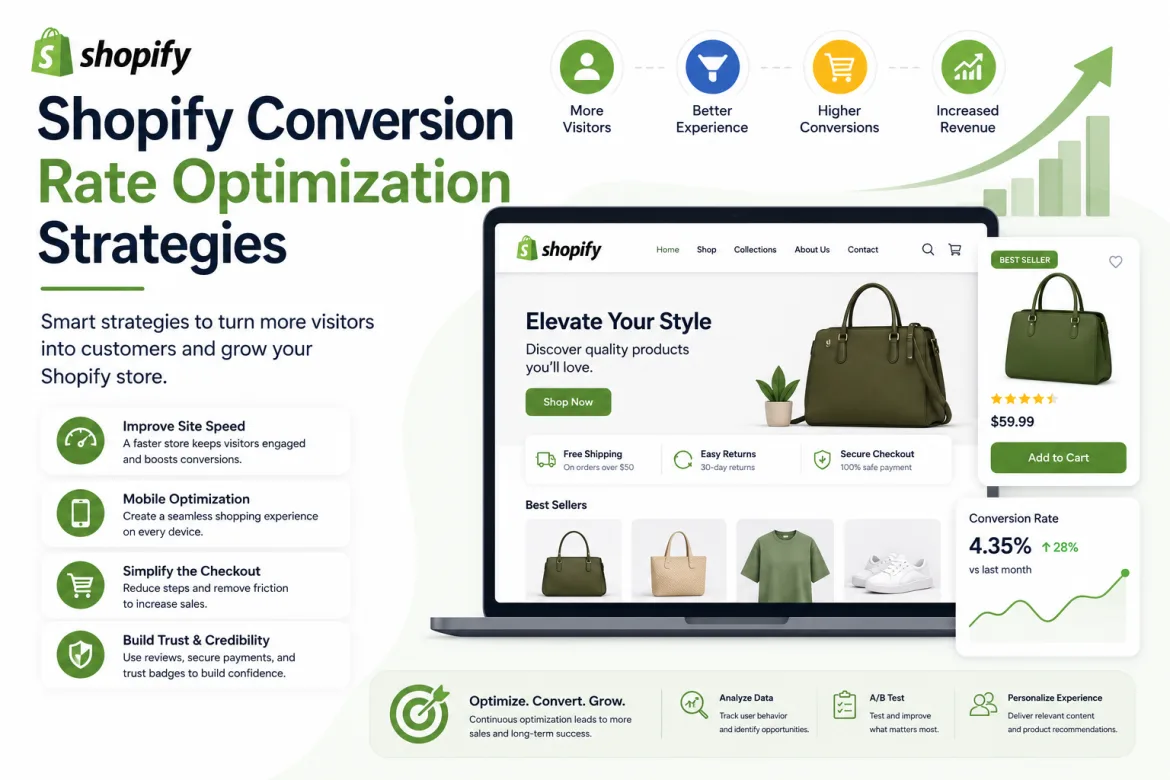
Running a Shopify store is no longer only about getting customers. Many businesses spend a lot of money on advertising, search engine optimization, and social media marketing to get people to visit their websites. However, if visitors leave without making a purchase, the firm misses out on potential chances. This is where Shopify Conversion Rate Optimization (CRO) comes in. CRO aims to improve the shopping experience so that more visits become paying customers.
For Shopify store owners, improving conversions is frequently more profitable than increasing visitors. A store that converts 4% of visitors instead of 2% has the potential to double its income without spending any additional money on advertising. This makes conversion rate optimization one of the most cost-effective growth tactics for eCommerce companies.
As competition in online retail heats up, shoppers have more options than ever. Businesses that offer a seamless, reliable, and user-friendly buying experience are more likely to prosper. This essay delves into efficient Shopify conversion rate optimization tactics, major elements impacting conversions, frequent pitfalls to avoid, and upcoming trends that can help online merchants maximize their sales potential.
Understanding Shopify Conversion Rate Optimization
Conversion Rate Optimization is the practice of optimizing several aspects of an online store to encourage users to take the desired actions. These actions could include making a purchase, subscribing to a newsletter, adding items to a cart, or completing a contact form. The primary goal is to improve the percentage of visitors who become customers.
Shopify offers a solid basis for eCommerce enterprises, however merely opening a store does not guaranty revenue. Several aspects influence customer behavior, including website design, product display, trust signals, loading speed, checkout convenience, and overall user experience. Small improvements in these areas can have a major impact on conversion rates.
Businesses that focus on CRO receive important insights into their customers’ preferences and purchasing behaviors. Instead of making assumptions, they analyze data to determine what inspires customers to buy and what drives them away. This data-driven approach contributes to a more effective online store.
A effective CRO strategy requires ongoing effort. It requires continuous testing, monitoring, and optimization. Consumer expectations shift over time, therefore businesses must constantly update their Shopify stores to stay competitive and enhance performance.
Optimize Store Speed for Better Conversions
Website speed has a significant impact on conversion rates. Modern customers want pages to load quickly, particularly on mobile devices. Even a few seconds of delay might lead to increased bounce rates and lost sales chances.
When a Shopify store loads slowly, visitors may feel frustrated and leave before browsing the products. Fast-loading businesses make a good first impression and encourage people to keep browsing. Search engines also like quicker websites, which can help to boost organic visibility.
Store owners should regularly assess page performance and identify things that may slow loading times. Large picture files, superfluous apps, numerous scripts, and unoptimized themes can all contribute to sluggish performance.
Improving website performance improves both the user experience and commercial results. Faster stores often have longer session durations, lower abandonment rates, and higher conversion rates, therefore speed optimization is an important CRO tactic.
PageSpeed Insights can be used to assess website performance and identify potential loading issues.
Create a Clear and User-Friendly Navigation Structure
Navigation acts as a road map for people exploring an online store. Customers are less likely to make a purchase if they cannot find the things they want. Clear navigation enhances the shopping experience while reducing annoyance.
A well-organized Shopify store categorizes things rationally and displays information in an intuitive manner. Visitors should be able to find products quickly without having to conduct extensive searches or navigate through several pages.
Simple menu structures help customers understand the store’s offers quickly. Categories, groupings, and filters should mirror how customers typically look for products. This makes browsing more convenient and fun.
User-friendly navigation enhances both conversions and customer satisfaction. When customers can readily find what they need, they are more likely to make a purchase and return for future transactions.
Improve Product Pages for Higher Conversion Rates
Product pages frequently influence whether a visitor becomes a buyer. These pages should include all of the information needed to support purchasing decisions while instilling confidence in the product.
Because online customers cannot inspect products in person, high-quality product photos are vital. Multiple photos taken from various perspectives help clients grasp product features and eliminate ambiguity. Videos can improve product presentation by showing usage and benefits.
Detailed product descriptions should highlight both features and customer benefits. Instead of simply listing specifications, firms should describe how the product solves problems or enhances the customer’s life. This strengthens emotional ties and increases purchase motivation.
Pricing, availability, delivery information, and return policies should all be clearly stated on product sites. Providing thorough information eliminates hesitancy and objections, which may hinder a sale.
Build Trust Through Social Proof
Customers cannot personally inspect things before purchasing, so trust is important in online purchasing decisions. As a result, people rely largely on trust signals to determine reliability and quality. Strong social proof reduces reluctance and increases trust in the purchasing process.
Customer evaluations are among the most efficient types of social evidence. Positive feedback from genuine purchasers validates product quality and addresses frequent problems. This helps potential customers make more educated selections.
- Promote genuine consumer reviews prominently.
- Use testimonials to showcase positive experiences.
- Promote user-generated photographs and material.
- Provide ratings to increase buying confidence.
Testimonials and user-generated material enhance brand credibility. When customers see other people utilizing a product successfully, they feel more confident in their purchase. Consistently displaying social proof improves conversion rates and fosters long-term client trust.
Simplify the Checkout Process
Many internet sales are lost during checkout owing to excessive complexity. Even if buyers have significant purchase intent, a difficult checkout experience might lead to cart abandonment.
A simplified checkout procedure reduces distractions and eliminates barriers. Customers should be able to complete their orders in as few steps as possible. Each additional form field or page raises the likelihood of abandonment.
Guest checkout options are especially useful because some customers prefer not to create an account before purchasing. Allowing rapid transactions can greatly boost conversion rates, particularly among first-time clients.
Transparency during the checkout process is equally vital. Customers may quit due to unexpected shipping expenses, taxes, or other fees. Providing precise pricing information from the start builds trust and encourages order completion.
Leverage Mobile Optimization
Mobile commerce is rapidly increasing, making mobile optimization critical for Shopify stores. Many shoppers now browse, compare, and make purchases directly from their cellphones. This shift makes mobile experience an essential component of eCommerce success.
A mobile-friendly store must have easy navigation, quick loading times, and responsive design. Users should be able to view products, read descriptions, and finish the checkout process without difficulty on smaller screens.
- Ensure responsive mobile design.
- Improve page load speed.
- Simplify the navigation structure.
- Use touch-friendly buttons.
Touch-friendly elements and simple layouts increase usage and decrease annoyance. When clients can simply interact with the store, they are more likely to finish their transactions. Mobile optimization directly improves conversion rates and promotes long-term growth.
Use Effective Calls-to-Action
Calls-to-action direct visitors to the required actions. Effective CTAs are essential for conversion optimization, whether they encourage visitors to add things to a cart, make a transaction, or subscribe to updates.
Strong CTAs employ simple and straightforward wording. Visitors should quickly grasp what actions are expected of them and what advantages they will gain. Confusing or ambiguous messaging might lower engagement.
CTA placement is also important. Buttons should be placed in prominent locations where people naturally look during their buying trip. Strategic positioning increases visibility and promotes contact.
Testing different CTA styles, wording, and placements can give useful information about client preferences. Continuous refinement enables organizations to maximize the effectiveness of their conversion paths.
Personalize the Shopping Experience
Personalization has become a critical component of modern eCommerce success. Customers value experiences that are tailored to their interests and preferences.
Shopify stores can leverage browser history, purchasing behavior, and customer data to recommend products based on individual preferences. Relevant advice frequently enhance the average order value and conversion rates.
Personalized email campaigns can also motivate clients to return and complete transactions. Cart abandonment reminders, product suggestions, and targeted incentives all help to keep customers engaged throughout their trip.
As consumers demand more personalized experiences, firms that provide relevant material and recommendations gain a competitive advantage while increasing customer happiness.
Key Factors That Influence Shopify Conversion Rates
Several key elements influence how well a Shopify site turns visitors into buyers. These variables define the overall shopping experience and influence buyer decisions at various points along the trip. Optimizing them is critical for increasing performance.
Website speed, product quality, mobile friendliness, and trust signals all contribute significantly to conversion success. A smooth and reliable shopping experience enables customers to make purchases without hesitation.
- Improve website speed and performance.
- Quality and substance of product pages.
- Mobile responsiveness.
- Customer reviews and trust signals.
- Simple checkout process
- Competitive price.
- Ensuring shipping transparency.
Each feature enhances the entire consumer experience and has a direct impact on conversion rates. Businesses that consistently improve in these areas typically generate increased sales and client retention.
Customer expectations are constantly changing, thus continual monitoring and optimization are required. Successful Shopify stores recognize that conversions are dependent on numerous variables functioning together, rather than simply one change.
The Importance of A/B Testing
A/B testing enables firms to evaluate different versions of shop pieces to see which one performs better. This technique eliminates guesswork and replaces assumptions with measurable outcomes.
Store owners can test headlines, product photos, call-to-action buttons, site layouts, pricing displays, and promotional messages. Even little tweaks can result in significant increases in conversion rates.
Testing uncovers crucial customer insights that may not be obvious at first. What corporations feel will perform best may not reflect actual customer preferences and behavior trends. This aids in the identification of actual user behavior and improves decision-making accuracy.
By conducting regular A/B testing, Shopify stores can make informed decisions that gradually enhance performance and optimize the return on investment from optimization efforts. It also promotes ongoing improvement by identifying what genuinely works for conversions.
Common Shopify CRO Mistakes to Avoid
Many organizations accidentally lower their conversion rates by committing simple optimization blunders. These difficulties typically go unnoticed, yet they can have a substantial impact on sales results. Identifying them early helps to avoid lost revenue possibilities.
Common mistakes include:
- Pages load slowly.
- Complex navigation structures.
- Low-quality product photos.
- Long checkout processes.
- Unknown shipping fees.
- Lack of consumer feedback
- Ignoring mobile users.
These difficulties cause friction in the client experience, often resulting in abandoned carts. Businesses that focus solely on traffic but disregard conversion optimization miss out on valuable income potential. Regular audits and adjustments contribute to better performance and easier client experiences.
The Future of Shopify Conversion Rate Optimization
The future of Shopify CRO will be more influenced by artificial intelligence and enhanced consumer analytics. Businesses will be able to use more sophisticated systems that evaluate behavior and automatically create individualized experiences.
AI-powered product suggestions will improve their accuracy and relevance. These tools will assist retailers in presenting products that are closely aligned with particular customer tastes, hence enhancing purchase likelihood.
Voice commerce and conversational shopping experiences are also likely to expand. Customers can connect with stores via voice assistants, chatbots, and intelligent support systems, which facilitate decision-making.
Data-driven personalization, predictive analytics, and automation will continue to shape how Shopify stores optimize conversions. Businesses who adopt these advances early will most likely acquire a competitive advantage in the shifting eCommerce landscape.
Measuring CRO Success
Measuring results is critical for determining whether optimization efforts are successful. Businesses should frequently analyze key performance metrics to assess progress and identify areas for future improvement.
Important indicators to consider are conversion rate, average order value, cart abandonment rate, bounce rate, customer lifetime value, and revenue per visitor. These indicators offer a thorough view of store performance.
Shopify Analytics can help businesses analyze sales, customer behavior, sessions, and other store performance data.
Analytics tools assist in identifying patterns and revealing locations where clients experience friction. Understanding these insights enables firms to implement targeted adjustments that yield measurable benefits.
Successful CRO programs integrate data analysis and continual experimentation. Monitoring performance ensures that optimization efforts remain in line with customer needs and corporate objectives.
Conclusion
Shopify Conversion Rate Optimization is one of the most efficient strategies for eCommerce firms to boost income without significantly increasing marketing costs. Businesses can improve their customer journeys by concentrating on store speed, navigation, product pages, trust signals, mobile experiences, customization, and checkout optimization.
As client expectations shift, CRO should be considered as a continuous activity rather than a one-time exercise. Businesses that constantly test, monitor, and improve their Shopify stores will be better positioned to achieve long-term growth, greater customer relationships, and competitive success in the ever-changing eCommerce industry.