

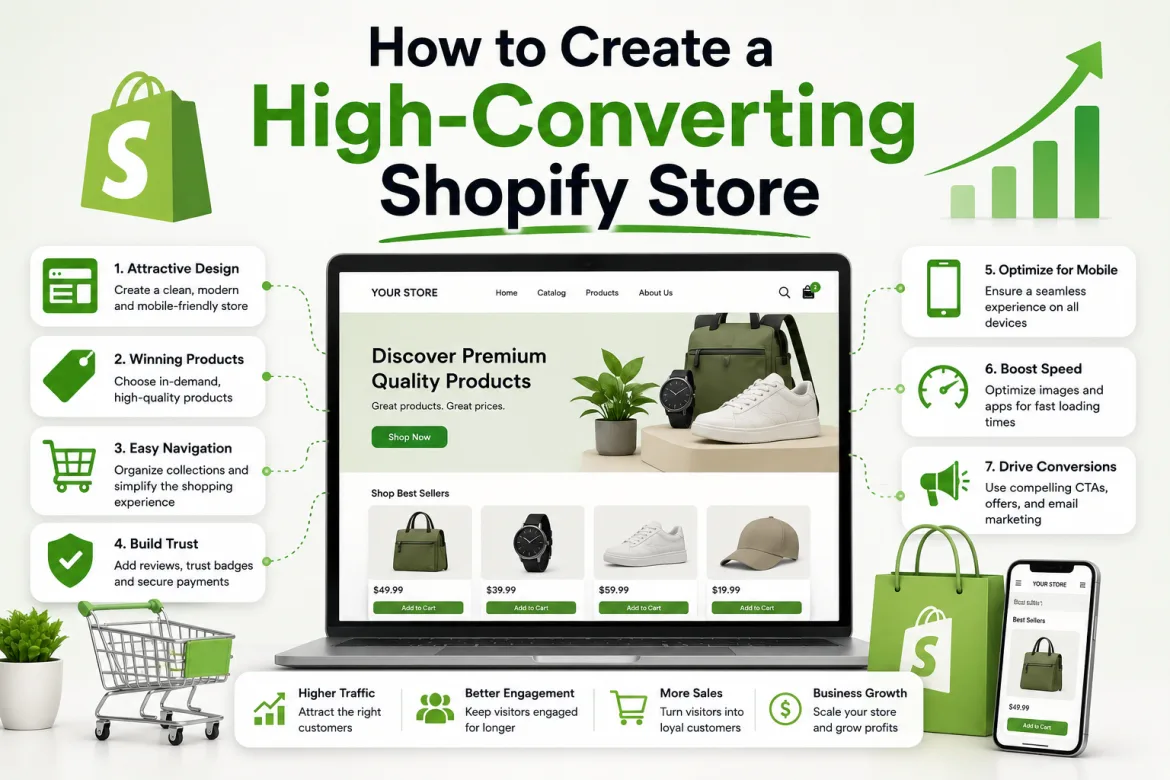
How to Create High Converting Shopify Store
In today’s competitive eCommerce landscape, simply launching an online store is not enough. Thousands of Shopify stores compete for customer attention every day, making it essential for businesses to focus on conversions rather than just traffic. A high-converting Shopify store is designed to turn visitors into paying customers by providing an excellent shopping experience, building trust, and making purchasing decisions easy.
Many business owners invest heavily in advertising and marketing campaigns but fail to see strong results because their store is not optimized for conversions. Even if a website attracts thousands of visitors, poor design, confusing navigation, slow loading times, or a complicated checkout process can prevent customers from making a purchase. This leads to lost revenue and wasted marketing budgets.
Creating a high-converting Shopify store requires a combination of strategic design, user experience optimization, persuasive content, and continuous improvement. By understanding customer behavior and implementing proven conversion strategies, businesses can significantly improve their sales performance while maximizing the value of every website visitor.
Understanding What Makes a Shopify Store Convert
A high-converting Shopify store is one that encourages visitors to complete desired actions, such as purchasing products, signing up for newsletters, or requesting information. Conversion optimization is about reducing friction and guiding customers toward a purchase decision in the simplest way possible.
Customers today expect a seamless online shopping experience. They want fast-loading pages, professional design, easy navigation, secure payment options, and clear product information. When these elements work together effectively, visitors feel comfortable and confident making purchases.
Successful Shopify stores focus on customer needs rather than simply showcasing products. They anticipate questions, eliminate doubts, and provide the information shoppers need at every stage of the buying journey. This customer-centric approach often results in higher conversion rates and improved customer satisfaction.
Businesses should view their Shopify store as a sales tool rather than just a digital catalog. Every page, image, button, and piece of content should support the goal of moving customers closer to a purchase while maintaining a positive shopping experience.
Choose the Right Shopify Theme
The foundation of a high-converting Shopify store begins with selecting the right theme. A well-designed theme creates a professional appearance and supports user-friendly navigation. Since first impressions are formed within seconds, the visual presentation of the store plays a critical role in conversion success.
A good Shopify theme should be mobile-responsive, fast-loading, and easy to customize. It should allow products to stand out while maintaining a clean and organized layout. Modern customers expect a smooth browsing experience regardless of the device they use.
Premium themes often provide additional features such as advanced filtering, enhanced product displays, and optimized checkout experiences. While free themes can be effective, businesses with growth ambitions may benefit from investing in premium solutions that offer greater flexibility and performance.
Store owners should avoid choosing themes based solely on appearance. Instead, they should evaluate how the theme supports usability, customer engagement, and conversion goals. A beautiful theme that creates confusion can hurt sales more than a simple but effective design.
Create a Professional and Trustworthy Design
Trust is one of the most important factors influencing online purchasing decisions. Since customers cannot physically see or touch products, they rely on visual cues to determine whether a store is credible and trustworthy.
Professional branding helps create consistency throughout the shopping experience. This includes using high-quality logos, consistent colors, readable typography, and professional product imagery. These elements work together to establish a reliable brand identity.
Customers often evaluate a business based on its website design. Outdated layouts, low-quality images, and inconsistent branding can create doubts about product quality and service reliability. Investing in professional design can positively influence customer perception.
Trust can also be strengthened through transparent policies, secure payment badges, customer testimonials, and visible contact information. When shoppers feel confident about the business behind the store, they are more likely to complete purchases.
Optimize Your Store for Mobile Users
Mobile commerce continues to grow rapidly, making mobile optimization a necessity rather than an option. A significant percentage of Shopify traffic comes from smartphones and tablets, and customers expect a seamless experience across all devices.
Mobile shoppers often browse while commuting, relaxing, or multitasking. This means navigation must be simple, buttons must be easy to tap, and pages must load quickly. Even minor usability issues can lead to abandoned sessions and lost sales.
Store owners should regularly test their websites on different devices and screen sizes. Product pages, checkout processes, navigation menus, and search functionality should all perform smoothly on mobile devices.
A mobile-friendly Shopify store not only improves user experience but also contributes to better search engine rankings. Search engines prioritize mobile usability, making mobile optimization valuable for both conversions and SEO performance.
Build Trust with Social Proof
Social proof helps reduce customer uncertainty and validates purchasing decisions. When potential buyers see positive experiences from existing customers, they are more likely to trust the brand and complete purchases.
Customer reviews provide valuable insights into product quality, performance, and customer satisfaction. Authentic reviews often answer questions that product descriptions may not fully address.
Businesses can strengthen social proof through:
- Verified customer reviews
- Product ratings
- Customer testimonials
- User-generated content
- Case studies and success stories
Social proof creates confidence because shoppers tend to trust the opinions of other customers more than marketing messages from brands themselves.
Write Product Descriptions That Sell
Product descriptions are often the deciding factor between a purchase and a lost opportunity. Effective descriptions do more than explain features—they communicate value and help customers visualize how products will improve their lives.
Instead of focusing only on technical specifications, businesses should explain the benefits customers will receive. For example, rather than stating that a backpack contains multiple compartments, explain how those compartments help users stay organized during travel or work.
Good product descriptions answer common customer questions and reduce uncertainty. They provide important details while maintaining an engaging and conversational tone that resonates with target audiences.
Businesses should also optimize product descriptions for search engines by naturally incorporating relevant keywords. This helps attract qualified traffic while maintaining readability and persuasive effectiveness.
Use High-Quality Product Images and Videos
Visual content plays a crucial role in online shopping decisions. Since customers cannot physically inspect products, images and videos become their primary source of information. High-quality visuals help build trust, highlight product details, and improve overall purchase confidence.
High-quality images help customers understand product details, materials, colors, and dimensions. Multiple angles allow shoppers to evaluate products more confidently and reduce hesitation during the buying process.
Videos can further enhance product understanding by demonstrating functionality, usage scenarios, and key benefits. Many successful Shopify stores use short product videos to increase engagement and build confidence.
The most effective visual content combines professionalism with authenticity. Businesses should strive to show products in real-world situations so customers can imagine themselves using them in everyday life.
Improve Navigation and User Experience
Website navigation directly influences how easily customers can find products and complete purchases. A confusing structure often leads to frustration and higher bounce rates. Effective navigation should guide visitors logically through product categories and collections. Customers should be able to locate desired products quickly without excessive searching or clicking.
Some important navigation elements include:
- Clear product categories
- Intuitive menu structures
- Effective search functionality
- Product filtering options
- Visible shopping cart access
When navigation is simple and predictable, customers spend less time searching and more time engaging with products, increasing the likelihood of conversion.
Optimize the Shopify Checkout Process
A complicated checkout process is one of the leading causes of cart abandonment. Customers who have already decided to purchase should encounter as few obstacles as possible before completing their transaction.
Simplifying checkout starts with reducing unnecessary form fields and minimizing required steps. Every additional action increases the risk of customers abandoning the process. A streamlined flow helps customers complete purchases more quickly and confidently.
Offering multiple payment methods can also improve conversion rates. Different customers prefer different payment options, and flexibility helps accommodate a broader audience. This increases convenience and reduces friction during checkout.
Transparency is equally important. Unexpected shipping costs, taxes, or fees introduced late in the checkout process can discourage customers and lead to abandoned carts. Clear pricing builds trust and improves purchase completion rates.
Improve Site Speed and Performance
Website speed has a direct impact on user experience and conversions. Modern consumers expect pages to load almost instantly, and delays can quickly drive visitors away. A slow-loading Shopify store can negatively affect customer satisfaction, search engine rankings, and overall sales performance. Even small speed improvements can result in measurable conversion gains.
Common strategies for improving site speed include:
- Compressing images
- Minimizing unnecessary apps
- Using optimized themes
- Reducing excessive scripts
- Monitoring performance regularly
Businesses should view speed optimization as an ongoing process rather than a one-time task. Continuous monitoring helps maintain strong performance as the store evolves.
Use Strategic Calls-to-Action
Calls-to-action guide visitors toward desired actions and play a major role in conversion optimization. Effective CTAs are clear, visible, and focused on customer intent. They help reduce friction and guide users smoothly through the buying journey.
Buttons such as “Add to Cart,” “Buy Now,” and “Start Shopping” should stand out visually while communicating clear next steps. Ambiguous language can create confusion and reduce engagement. Strong wording improves click-through rates and overall user response.
Strategic placement is equally important. Customers should encounter relevant CTAs naturally throughout their shopping journey without feeling overwhelmed by excessive prompts. Proper placement increases the chances of conversion at key decision points.
Testing different CTA designs, messages, and placements can help businesses identify what resonates most effectively with their audience and drives stronger results. Continuous optimization ensures better performance and higher conversion rates over time.
Key Factors That Influence Shopify Conversions
Several factors consistently influence whether visitors become customers. Understanding these factors helps businesses prioritize optimization efforts effectively and focus on improvements that directly impact sales and user experience.
Key conversion factors include:
- Website trust and credibility
- Product presentation quality
- Checkout simplicity
- Site speed performance
- Customer reviews and social proof
Businesses that consistently improve these areas often experience stronger conversion rates and long-term growth.
Common Mistakes That Hurt Shopify Conversion Rates
Many Shopify stores struggle with conversions because of avoidable mistakes. Recognizing these issues allows businesses to make improvements before they significantly impact revenue. One common mistake is focusing heavily on attracting traffic while neglecting user experience. High traffic volumes mean little if visitors encounter barriers that prevent purchases.
Another frequent issue is using poor-quality images or incomplete product information. Customers need confidence before making buying decisions, and insufficient information creates hesitation.
Many businesses also overload their stores with unnecessary apps and design elements. While additional features may seem beneficial, excessive complexity often slows performance and distracts customers from purchasing.
Finally, failing to analyze customer behavior can prevent meaningful optimization. Businesses that do not monitor performance data may miss valuable opportunities to improve conversions and customer satisfaction.
The Future of High-Converting Shopify Stores
The future of Shopify conversion optimization will be increasingly driven by personalization, automation, and customer experience improvements. Businesses that adapt to changing customer expectations will gain competitive advantages.
Artificial intelligence is already helping merchants deliver personalized product recommendations, targeted marketing campaigns, and smarter customer support experiences. These technologies can increase engagement and improve conversion rates.
Customer expectations for speed, convenience, and seamless shopping experiences will continue to rise. Businesses must continually refine their stores to meet these evolving demands.
Successful Shopify stores of the future will combine technology with customer-centric thinking. Rather than focusing solely on sales, they will prioritize creating valuable and memorable shopping experiences that encourage repeat purchases and long-term loyalty.
Conclusion
Creating a high-converting Shopify store requires more than attractive design. It involves understanding customer behavior, building trust, optimizing user experience, and continuously improving every stage of the buying journey. From mobile responsiveness and product presentation to checkout optimization and social proof, each element contributes to conversion success.
Businesses that invest in conversion-focused strategies can maximize the value of their traffic, improve customer satisfaction, and generate sustainable growth. By consistently testing, learning, and refining their Shopify stores, business owners can create an online shopping experience that not only attracts visitors but successfully converts them into loyal customers.