

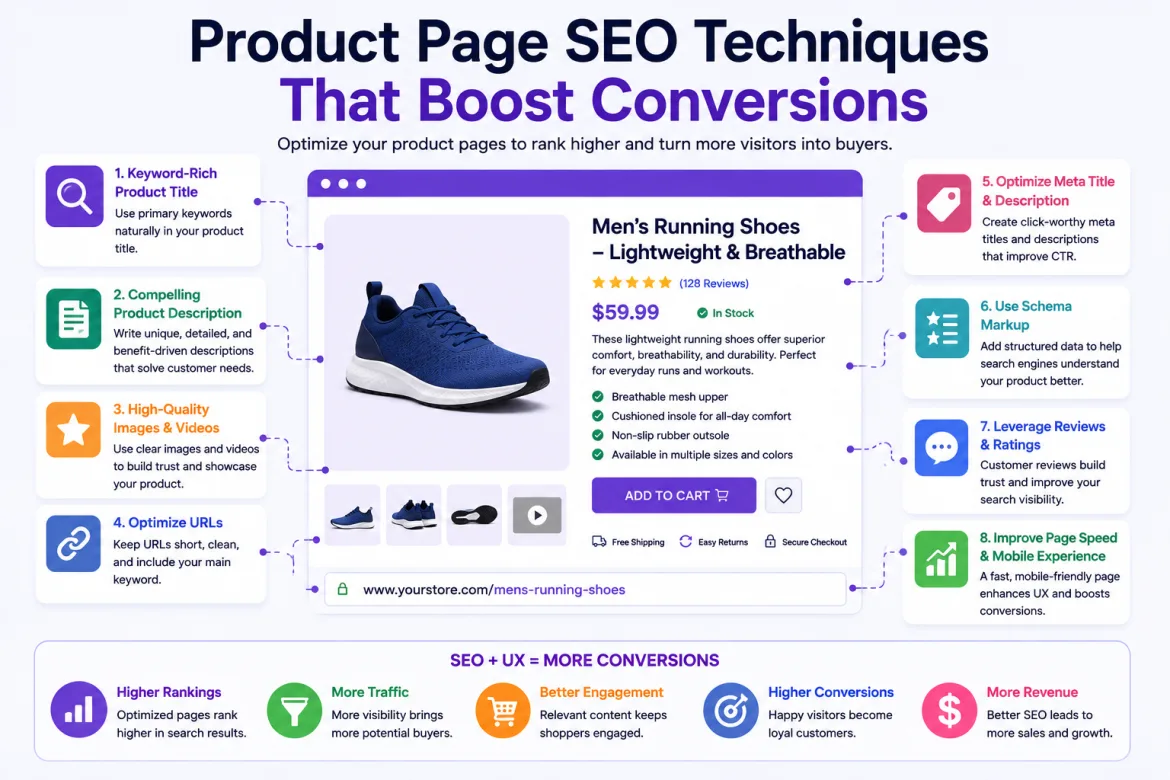
In today’s competitive eCommerce environment, simply having an online business is insufficient to create continuous revenue. Businesses devote enormous resources to obtaining visitors via search engines, social media, and paid advertising, but many struggle to turn that traffic into consumers. Product page SEO is crucial in bridging the visibility-to-revenue gap.
Before deciding whether or not to make a purchase, a buyer frequently arrives to a product page. If the page lacks essential information, loads slowly, or fails to address consumer concerns, visitors may abandon the transaction. A well-optimized product page, on the other hand, can boost search ranks while also providing a smooth purchasing experience that boosts conversions.
Product page SEO involves more than just adding keywords to descriptions. It entails optimizing content, pictures, user experience, technological elements, and trust signals to fulfill both search engine and customer demands. Businesses that employ the appropriate techniques can increase organic traffic, improve engagement, and eventually increase sales.
Understand Search Intent Before Optimizing
Understanding the intent of consumer queries is the first step toward successful product page SEO. People browsing for things online are frequently at different phases of the purchasing process. Some may be looking over choices, while others are ready to make an immediate purchase. Identifying these goals enables firms to generate content that meets client expectations.
Search intent has a direct influence on keyword selection. Rather than targeting broad terms with strong competition, firms can concentrate on targeted keywords that signal purchasing intent. Someone searching for “best waterproof hiking boots for men” is more likely to make a purchase than someone searching for “hiking boots.”
Understanding intent can also help you improve product descriptions, names, and calls to action. When content matches what buyers are looking for, they are more likely to stay on the page and interact with the product. This improves the user experience and sends positive signals to search engines.
Businesses should conduct regular analyzes of search queries, consumer behavior, and rival strategy to uncover valuable keywords. By matching product pages with consumer intent, businesses may attract highly qualified traffic that is more likely to convert into sales.
Create Unique and Detailed Product Descriptions
Many online retailers rely on manufacturer-provided descriptions, which are frequently found on various websites. This leads to duplicate content issues, which can restrict search visibility and opportunities to differentiate out from competition.
Unique product descriptions enable firms to engage directly with their intended audience. Rather than just stating technical details, descriptions should illustrate how the product solves a problem or enhances the customer’s life. This strategy increases the content’s engagement and persuasiveness.
Detailed descriptions also give search engines additional information about the goods. Including essential keywords naturally throughout the content boosts ranks while also keeping the page informative and easy to read.
For example, rather than stating that a laptop has a long-lasting battery, explain how the battery supports remote work, travel, or extended productivity. This practical information helps customers visualize the benefits and increases the likelihood of a purchase.
Optimize Product Titles for Search and Clicks
Product titles are essential SEO features on product pages because they assist search engines interpret the content and influence user click-through rates. A well-optimized title defines the product simply and provides important information such as the brand, model, size, color, and primary features.
- Describe the product using relevant keywords.
- List brand name, model, size, color, and major characteristics.
- Increase search prominence for relevant inquiries.
- Boost click-through rates in search results.
- Well-structured titles increase visibility, eliminate customer confusion, and enhance the buying experience.
For example, a title like “Samsung Galaxy Watch 6 Bluetooth Smartwatch – 44mm Black” is considerably more effective than a generic title like “Smartwatch” because it is more specific and stimulates clicks.
Write Compelling Meta Titles and Meta Descriptions
Meta titles and meta descriptions provide the initial impression of your product page in search engine results. Although users may not have previously visited your website, these factors can affect whether they choose your listing over a competitor’s.
A strong meta title should contain the major keyword and product name while staying simple and understandable. It should appropriately reflect the page’s content and entice users to click.
Meta descriptions allow you to highlight product features, promotions, pricing advantages, or unique selling aspects. A captivating description can boost click-through rates from organic search results.
Businesses should examine and update their information on a regular basis to keep it relevant and competitive. Well-written metadata not only boosts exposure, but it also attracts visitors who are more likely to buy.
Use High-Quality Product Images with SEO Optimization
Visual content is important in online purchasing decisions because shoppers use photos to evaluate product quality, design, and usefulness before making a purchase. High-quality images give a professional appearance and foster trust among potential buyers. Multiple photos from various viewpoints and real-world applications help clients make more informed selections while increasing overall engagement.
Key Image Optimization Practices
- Use high-resolution photos that load quickly.
- Use meaningful file names that include relevant keywords.
- Provide accurate and appropriate alt text for all images.
- Improve page performance by compressing image files.
Optimizing product photos not only increases user experience and trust, but it also boosts SEO performance, resulting in increased visibility and conversion rates.
Improve Product Page Loading Speed
Website speed has become an important ranking criteria and contributor to user satisfaction. Customers want pages to load promptly, and delays can result in irritation and abandoned orders.
Slow-loading product pages can have a negative influence on bounce rates, engagement metrics, and conversions. Even minor delays might result in lost income, especially for mobile users who anticipate fast access to information.
Businesses should regularly use speed testing tools to assess page performance. Identifying and addressing technological issues contributes to a good purchasing experience. Consistent monitoring ensures that your website remains quick, stable, and optimized for both users and search engines.
Common enhancements include picture compression, browser caching, code optimization, and dependable hosting services. Faster pages boost SEO performance and consumer pleasure, laying a solid basis for conversions. Businesses can use Google PageSpeed Insights to evaluate page performance.
Implement Structured Data for Better Visibility
Structured data helps search engines better grasp product information. Businesses can boost the visibility of their items in search results by offering more context.
Schema markup allows for the direct display of valuable information such as pricing, availability, ratings, and reviews within search results. These enhanced results frequently receive more attention than normal listings.
Rich snippets allow customers to swiftly evaluate products before clicking. Customers are more inclined to visit a page if the ratings and pricing information are visible right away.
Implementing structured data also enhances communication between websites and search engines. This can result in improved indexing, increased visibility, and higher-quality traffic over time. Businesses can learn more about product structured data through Google Search Central’s Product Structured Data documentation and Schema.org Product.
Optimize Calls-to-Action and User Experience
Driving visitors to a product page is merely one aspect of the conversion process. Businesses must also encourage visitors to take action once they get on the page.
Calls-to-action like “Buy Now,” “Add to Cart,” or “Get Yours Today” should be prominently displayed and carefully placed. Customers should never need to look for the next step in the purchasing process.
The user experience extends beyond button placement. Product pages should provide clear pricing, delivery details, return policies, and product availability. Transparency helps to minimize reluctance and foster confidence.
A smooth and straightforward shopping experience encourages customers to make purchases. When users can quickly traverse the page and locate the information they require, conversion rates often increase dramatically.
Internal Linking for Better Navigation and SEO
Internal linking helps search engines understand your website’s structure while also facilitating user navigation by connecting relevant products and content. It encourages users to explore more pages, which increases engagement and lowers bounce rates, thus leading to improved conversions and customer retention. Internal links also distribute SEO value throughout your site, allowing crucial pages to perform higher in search results.
Effective Internal Linking Strategies
- Link relevant products on product pages.
- Connect products to appropriate category sites.
- Provide connections to buying guidelines and educational materials.
- Ensure website navigation is simple and easy to follow.
- Highlight popular or best-selling products as appropriate.
Effective internal linking not only helps website navigation, but it also boosts your overall SEO performance by spreading authority across key sites. When used strategically, it improves the user experience, boosts engagement, and supports improved search ranks.
Key Factors That Influence Product Page SEO Success
Several elements influence the efficiency of product page SEO. Businesses that focus on these areas are more likely to achieve long-term growth and higher conversion rates.
Key Factors to Focus On
- Analyze search intent and keyword relevancy.
- Offering unique and excellent product content.
- Fast page loading speed.
- Mobile-friendly design.
- Consumer feedback and trust indicators.
Consistently improving these aspects enables firms to produce product pages that satisfy both search engines and customers. Over time, these enhancements contribute to higher rankings and revenues.
Optimize for Mobile Shopping
Mobile shopping continues to dominate the eCommerce business, making mobile optimization critical to success. Smartphones and tablets now account for an increasing percentage of internet purchases.
Search engines promote mobile-friendly websites because they offer a better user experience. Businesses that ignore mobile optimization risk losing ranks and potential clients.
Product pages should be responsive to all screen sizes and load quickly. The navigation, visuals, and checkout processes should all be designed with mobile consumers in mind.
A flawless mobile experience promotes consumer satisfaction and conversion rates. As mobile commerce grows, organizations must prioritize mobile optimization as a component of their SEO strategy.
The Future of Product Page SEO
Artificial intelligence, voice search, and tailored shopping experiences will all have an impact on the future of product page SEO. Search engines are becoming more adept at recognizing user behavior and intent.
AI-powered search engines will continue to reward websites that offer useful, relevant, and user-friendly material. Businesses will need to focus on customer experience rather than just basic keyword optimization.
Voice search is also changing the way people look for things online. As voice-assisted shopping grows increasingly popular, product pages that are geared for conversational queries may acquire a competitive advantage.
Furthermore, personalization will play an increasing role in eCommerce success. Businesses that leverage customer data to provide personalized product recommendations and experiences are expected to see higher engagement and conversion rates in the coming years.
Common Product Page SEO Mistakes to Avoid
Many firms unintentionally hinder their SEO success by making preventable errors. Identifying and resolving these issues can greatly boost rankings and conversion rates. Avoiding these issues contributes to increased exposure, a better user experience, and more consistent organic traffic growth.
Common Mistakes
- Using redundant manufacturer descriptions.
- Ignoring image optimization and alt text.
- Generating ambiguous or incomplete product titles.
- Neglecting the mobile user experience.
- Failure to collect consumer reviews.
Avoiding these problems strengthens the basis for both search exposure and consumer interaction. Regular audits can help firms uncover areas for improvement before they have an impact on performance.
Conclusion
Product page SEO is more than just improving search rankings; it is a comprehensive strategy that includes content optimization, technical performance, user experience, and trust-building components to provide tangible commercial benefits. Businesses that prioritize understanding consumer intent, generating original content, increasing page speed, utilizing reviews, and improving mobile experience can achieve a significant competitive edge while drawing more organic traffic.
As eCommerce continues to grow, product pages will remain one of the most valuable assets for online success. Implementing successful SEO techniques and reacting to shifting trends enables organizations to increase conversions, strengthen customer connections, and achieve long-term, sustainable growth.