

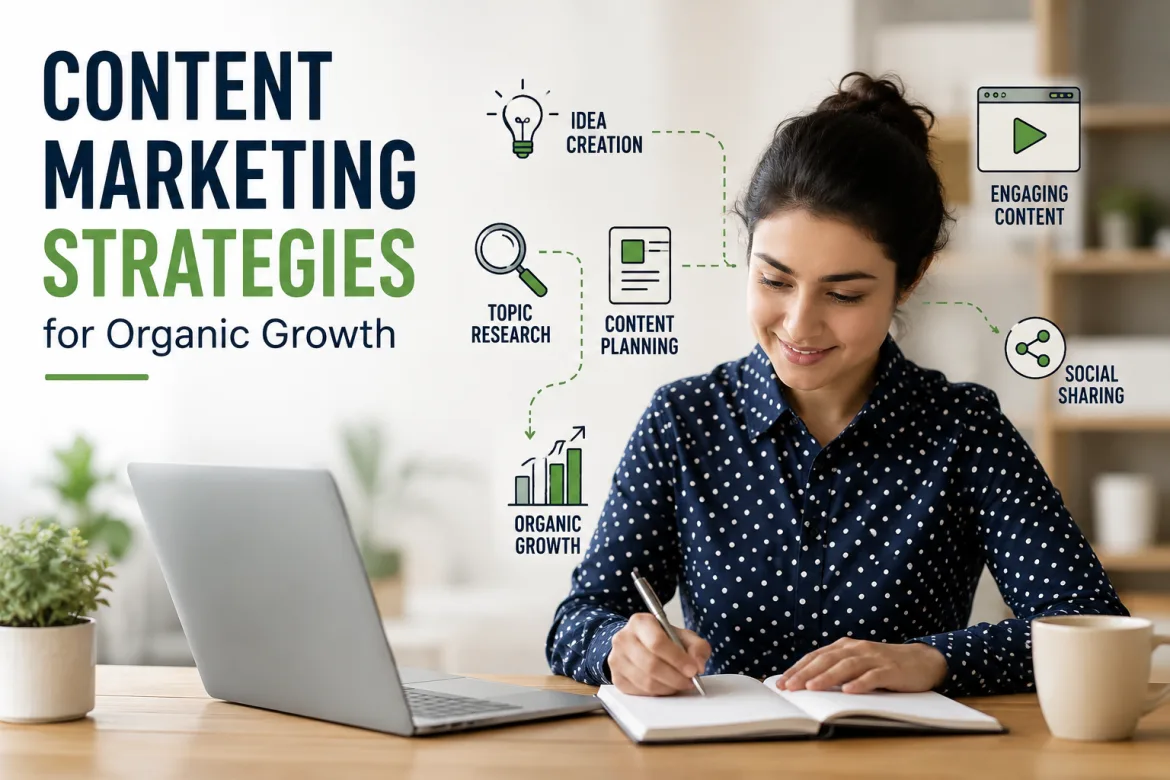
In today’s competitive digital world, businesses are continuously looking for long-term solutions to attract clients without relying just on paid advertising. This is where content marketing transforms into one of the most effective long-term growth methods. Businesses that create quality, informative, and entertaining content will automatically attract their target audience, build trust, and boost their online exposure.
Organic development through content marketing does not involve fast wins. Instead, it focuses on consistently providing useful information that helps potential customers solve problems, answer questions, and make informed decisions. When done right, content marketing can drive qualified traffic, raise brand awareness, and help businesses develop for years.
Whether you are a small business owner, startup founder, or marketing professional, understanding the correct content marketing methods will help you improve your search engine rankings and build deeper customer relationships without constantly increasing your advertising budget.
Understand Your Target Audience Before Creating Content
Understanding your target audience and their needs is the first step toward successful content marketing. Many organizations make the mistake of writing content focused on what they want to say rather than what their customers want to know. This generally results in low involvement and poor outcomes.
Researching client pain areas, typical inquiries, and purchasing behaviors can help you create content that truly resonates with your target audience. Customer surveys, social media conversations, website analytics, and sales team feedback can all provide useful insights into what consumers are looking for.
When your material addresses genuine client concerns, it becomes more relevant and helpful. Search engines notice this value, which can help you rank higher and bring more organic traffic over time.
Focus on High-Quality and Valuable Content
Quality content remains at the heart of every effective content marketing campaign. Search engines prioritize material that gives relevant information, exhibits competence, and offers a pleasant user experience. Publishing enormous amounts of low-quality information rarely yields long-term consequences.
Every blog post, guide, article, or resource should be intended to answer a specific question or address a specific problem. Instead than developing material exclusively for search engines, aim to provide true value to readers. This strategy automatically increases engagement, time on page, and content sharing.
For example, a software vendor can create extensive tutorials to assist customers in overcoming typical issues. A local firm may create educational materials that address frequently asked client questions. These practical tools frequently attract visitors long after they have been published.
For additional guidance on creating useful content, see Content Marketing Institute’s content marketing resources.
Build a Strong SEO Content Strategy
Search engine optimization and content marketing are most effective when coupled.
Begin by determining the terms that your target audience is currently searching for. Concentrate on both broad industry terms and long-tail keywords that address unique client requirements. Long-tail keywords typically have less competition and attract visitors who are closer to making a purchase decision.
An effective SEO content strategy should include:
- Conduct primary and secondary keyword research.
- Optimized page titles and meta descriptions.
- Clear heading structure.
- Provide internal links between similar information.
- User-friendly content formatting.
When SEO is naturally interwoven into your material, it promotes organic visibility while maintaining readability.
For additional SEO guidance, see Google Search Central’s SEO resources.
Create Evergreen Content for Long-Term Traffic
Evergreen content is one of the most significant assets in a content marketing strategy because it continues to generate traffic even after it has been published. Unlike hot subjects, which lose their relevance rapidly, evergreen material is relevant for months or even years. This makes it an effective tool for businesses seeking sustainable organic growth.
Businesses can develop evergreen content by focusing on timeless themes that answer often asked questions or solve reoccurring problems. Educational guides, tutorials, industry basics, and how-to articles frequently do well since people repeatedly seek this information over time.
Popular evergreen content types:
- How-to guides.
- Tutorials for beginners.
- Frequently Asked Questions (FAQs).
- Industry best practices.
A rich collection of evergreen content assists organizations in establishing authority, attracting steady visitors, and reducing reliance on constantly producing fresh content.
Develop a Consistent Publishing Schedule
Consistency is an important feature in content marketing success. Search engines appreciate websites that routinely produce new and relevant material, whereas audiences are more likely to engage with brands that continually deliver value. Publishing material on a consistent timetable fosters trust and keeps your audience interested.
A content calendar can help firms arrange themes, assign roles, and ensure publishing consistency. Even posting one high-quality article every week can be more effective than publishing multiple pieces infrequently.
Benefits of Consistent Publishing:
- Enhances search engine visibility.
- Ensures audience engagement.
- Boosts brand authority.
- Increases ranking opportunities.
The goal is not to generate more content, but to continuously publish high-quality information over time.
Repurpose Content Across Multiple Channels
Creating high-quality content takes time and effort, which is why content reuse is such an effective technique. Instead of limiting a blog post to a single format, organizations may convert it into many content pieces that target diverse audiences across multiple channels.
A lengthy blog article, for example, can be adapted into social media postings, an email newsletter, a short video, an infographic, or even a webinar topic. This method extends the life of content while increasing its return on investment.
Repurposing also contributes to a consistent marketing message across mediums. Different individuals consume content in different ways, therefore adjusting content formats boosts your chances of reaching potential clients wherever they spend their time online.
Businesses that constantly repurpose content frequently increase engagement without significantly raising content creation expenditures. It enables marketing teams to function more efficiently while ensuring a consistent flow of useful information.
Use Content to Build Trust and Authority
Customers rarely make purchases from brands they do not trust. Content marketing assists firms in establishing credibility by demonstrating competence and giving useful information prior to asking for a sale. The more value you supply, the more likely potential clients are to regard your company as a reliable resource.
Sharing industry insights, case studies, research findings, and practical advice helps to establish your organization as an authority in your field. Over time, people come to identify your brand with trustworthy and accurate information.
Effective Ways to Build Authority:
- Publish expert insights.
- Provide real client success stories.
- Develop detailed educational resources.
- Offer actionable industry advice.
When trust and authority grow, customer connections strengthen, resulting in higher engagement, conversions, and long-term loyalty.
Leverage Content Distribution and Promotion
Even the best content may fail to produce effects if no one sees it. Content distribution and promotion guarantee that valuable content reaches the intended audience at the appropriate moment. Publishing material should be considered as the first, not the last, stage in the process.
Businesses should actively promote their content using social media, email marketing, industry communities, and professional networks. Strategic promotion can considerably improve visibility and generate qualified traffic faster than relying simply on search engines.
Building ties with industry influencers and similar firms can also help to increase content reach. These collaborations frequently provide opportunities for backlinks, guest content, and increased audience visibility.
A successful content strategy combines both content creation and content promotion. Without distribution, even exceptional content may never achieve its full potential.
Measure Performance and Improve Continuously
Content marketing is a continuous activity that benefits from periodic analysis and optimization. Monitoring key performance data helps discover which material is producing results and where improvements are required.
Important metrics to track are:
- Organic website traffic.
- Ranking of keywords.
- Time on page
- Conversion rates.
- Increased backlinks
- Social engagement
Businesses that evaluate performance data on a regular basis can fine-tune their content strategies, focus on high-performing themes, and continually improve their organic growth efforts.
Key Factors Behind Successful Content Marketing
Every great content marketing strategy is based on a few key fundamentals. While techniques may evolve over time, these key criteria remain crucial to long-term organic growth.
Key Success Factors:
- Strong understanding of the target audience.
- Publish high-quality content consistently.
- Strong SEO base.
- Effective content promotion.
- Conduct regular performance analysis.
- Continuous content improvement.
When these factors are combined, content marketing becomes a potent tool for drawing traffic, establishing authority, and promoting long-term business growth.
Common Content Marketing Mistakes to Avoid
Many firms devote time and resources to content marketing, yet fail to obtain the expected outcomes due to avoidable blunders. Understanding these frequent difficulties can help you increase your content’s performance and maximize your ROI.
One of the most common mistakes is focusing too much on promotional content. Audiences often favor instructional and informative content over continual commercial messaging. Another prevalent issue is posting material without considering consumer demands or search intent.
Businesses also frequently overlook content revisions. Older material may lose relevancy over time, significantly impacting rankings and user experience. Regularly examining and renewing existing content improves performance.
Finally, many organizations do not effectively measure their results. Tracking key metrics like traffic, engagement, and conversions provides useful information for optimizing future content strategy.
The Future of Content Marketing
The future of content marketing will prioritize user experience, personalization, and high-quality content. Search engines are increasingly valuing information that really benefits people over content prepared solely to rank for keywords. This makes value-based content more crucial than ever.
AI is also altering the industry. While AI tools can help with research and content creation, pairing them with human creativity improves accuracy, originality, and authenticity. As a result, content success will rely heavily on real-world experience and distinctive insights.
- Increase in video material.
- Interactive content forms.
- Personalized recommendations.
- AI and human content production
- Provide user-centric search results.
Overall, organizations who adapt to these changes and continuously produce valuable content will remain competitive and expand their online presence.
Conclusion
Content marketing is one of the most effective tactics for generating long-term organic growth. Businesses may attract qualified traffic and develop long-term client connections by understanding their target, generating good content, following SEO best practices, and remaining consistent.
Organic growth does not occur quickly, but firms who invest in high-quality content often reap long-term rewards. A well-thought-out content marketing strategy may increase search exposure, establish brand authority, and generate a regular stream of potential customers without relying entirely on paid advertising. As digital competition intensifies, firms that prioritize valuable content will be better positioned for long-term success.