

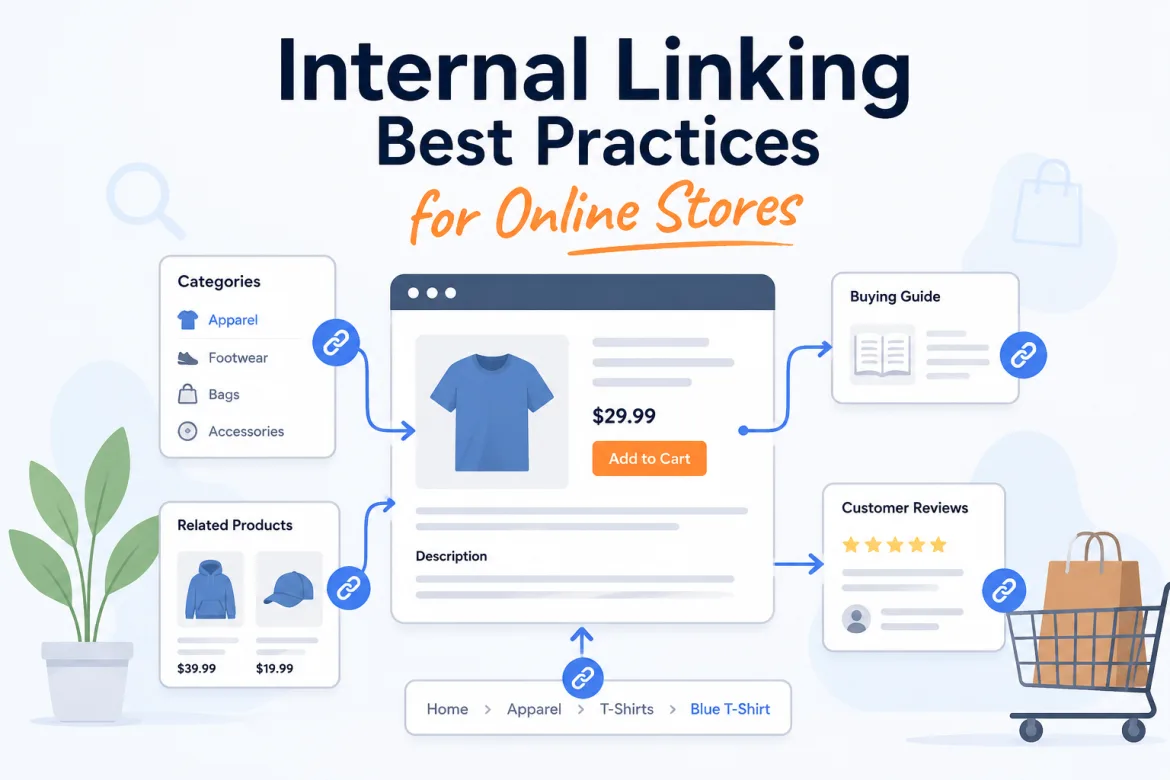
Internal linking is one of the most underestimated but effective SEO methods for online retailers. While many organizations prioritize keyword research, content production, and backlinks, they frequently underestimate the importance of linking pages on their own website. A solid internal linking structure helps search engines understand your website while also directing people to relevant products and information.
Internal links serve as channels for eCommerce firms, connecting items, categories, blogs, and informational pages. When utilized appropriately, they improve website navigation, increase page exposure, and assist users in discovering products they would not have found otherwise. This results in a more seamless shopping experience, which can lead to increased conversion rates.
As online companies expand and add more products, having an ordered website structure becomes increasingly crucial. Internal linking is a useful option since it distributes authority across pages, reduces orphan pages, and ensures that customers and search engines can simply explore the site. Understanding and applying best practices can dramatically boost long-term SEO success.
Understanding Internal Linking in eCommerce
Internal linking are connections that connect one page of a website to another within the same domain. Internal connections, as opposed to external links that direct readers to other websites, keep consumers within your store ecosystem and encourage deeper engagement with your content and items.
Internal links in an online store can connect category pages to product pages, blog pieces to product suggestions, product pages to similar items, and homepage parts to key categories. These linkages form a logical framework that facilitates usability and search engine crawling.
Internal links help search engines locate pages and identify content relationships. Pages with more internal links are frequently regarded as more vital within the website structure. This makes internal linking a useful technique for highlighting important pages.
Internal links make it easier for customers to find relevant products by simplifying navigation. Instead than relying simply on search functions, visitors can navigate the website according to their preferences and needs.
Why Internal Linking Matters for Online Store SEO
Internal linking is crucial for search engines crawling and indexing page material efficiently. Large online stores can have hundreds or thousands of product pages, thus excellent navigation is critical for search visibility.
When pages are correctly linked, search engines may navigate deeper into the website more effortlessly. This boosts indexing rates and the likelihood of valuable product pages appearing in search results. Without internal links, key pages may go unnoticed or receive less attention from search crawlers.
Internal linking also distributes authority around the website. Pages with high authority, such as homepages and popular category pages, can provide value to other pages by strategic linking. This improves the ranking potential of product and informational pages.
Another key advantage is increased user involvement. Visitors who find related products, useful tips, and relevant categories are more likely to stay on the website for longer. Increased interaction signals often have a good impact on overall website performance.
Using Category Pages as Internal Linking Hubs
Category pages frequently have high authority because they are linked from navigation menus, homepages, and other essential portions of a website. This makes them effective centers for propagating internal links throughout an eCommerce store.
Well-structured category pages should direct customers to relevant products and categories. For example, a clothing category can link to shirts, pants, jackets, and accessories, increasing subject relevance and improving navigation.
- Connect category pages to all relevant product pages
- Link to related categories for better structure
- Add contextual links within category descriptions
- Improve visibility of less-promoted product pages
Strategic internal linking via category pages helps to effectively distribute authority and enhances overall SEO performance across the website.
Building a Logical Site Structure
A well-organized website structure is the foundation for successful internal linking. Before generating connections, organizations should verify that pages are logically organized and classified based on product categories and user purpose.
Category pages should serve as primary hubs, connecting similar products. For example, an online electronics store could offer sections for cellphones, laptops, and accessories. Each category should include links to relevant products and subcategories.
The site should also be used as a strategic starting point. Important categories, prominent collections, seasonal discounts, and best-selling products should be easily accessible via internal links. This aids both users and search engines in identifying priority pages.
Maintaining a hierarchical structure guarantees that no crucial page is buried too far down the website. Ideally, visitors should be able to access essential products from the homepage with a few clicks, resulting in a seamless navigating experience.
For additional guidance on organizing an online store, see Shopify’s guide to optimizing site structure for search engines.
Leveraging Product-to-Product Internal Links
Product pages offer excellent opportunity to keep users engaged by directing them to relevant goods. Strategic internal linking of products enhances discovery and encourages subsequent purchases within the store.
Common sections such as “Related Products,” “Frequently Bought Together,” and “Customers Also Viewed” provide obvious connections between items. These links improve the buying experience while also facilitating internal navigation.
- Increase product discovery through related suggestions
- Use sections like “Frequently Bought Together”
- Link complementary items for better shopping flow
- Improve engagement with relevant product recommendations
Well-planned product-to-product linking enhances the user experience and immediately contributes to greater conversions by directing customers to significant product combinations.
Connecting Blog Content to Product Pages
Internal connections connect blogs and product pages, which improves content marketing and eCommerce SEO. Informational material can attract visitors at various phases of the purchasing process and direct them to suitable products.
A blog post about skincare routines can naturally refer to skincare goods available in the store. Similarly, a fitness equipment retailer can connect workout recommendations to exercise products for sale.
These contextual links add value to readers while also advancing SEO aims. Search engines acquire a better knowledge of content linkages, while individuals obtain relevant recommendations based on their interests.
Businesses should focus on making meaningful connections between content and products rather than simply putting links for SEO objectives. Relevance remains the most crucial factor in effective internal linkage.
Best Practices for Anchor Text
Anchor text refers to the clickable words used in hyperlinks. Effective anchor text informs consumers about what they will find after clicking a link and adds context to search engines. Using clear and appropriate anchor text enhances both the user experience and SEO performance by increasing link relevancy.
Some best practices include:
- Use descriptive and relevant anchor text.
- Avoid generic phrases like “click here” whenever possible.
- Include keywords naturally without forcing them.
- Keep anchor text concise and clear.
- Ensure it accurately represents the destination page.
For example, linking with the term “men’s running shoes collection” adds significantly more context than simply saying “learn more.” Clear anchor text enhances both the user experience and SEO value.
Managing Internal Links in Navigation Menus
Navigation menus are some of the most effective internal linking elements on an eCommerce website. Because they occur on several pages, they help to construct site structure and distribute authority effectively.
Menus should emphasize key categories and collections that customers commonly search for. Overcrowding menus with too many links can cause confusion and reduce their efficacy.
Dropdown menus can assist manage huge stockpiles while remaining usable. Businesses should categorize comparable products logically to prevent overwhelming visitors.
Regular assessments of the navigation layout guarantee that critical pages remain easily accessible as product offers grow and improve.
Using Breadcrumb Navigation Effectively
Breadcrumb navigation offers consumers with a clear path that indicates their place within the website hierarchy. These links improve navigation while also providing SEO benefits and allowing people to rapidly move between sections of a website.
A breadcrumb trail might appear as:
Home > Electronics > Laptops > Gaming Laptops
This layout makes it easy for visitors to return to prior categories while also helping search engines grasp the link between pages. It enhances overall site organization and crawlability.
Breadcrumbs also provide extra internal connecting options while preserving the user experience. They improve usability, minimize confusion in enormous product catalogs, and encourage more engagement by making navigating more intuitive.
Breadcrumbs are especially useful for retailers with large inventories since they simplify navigation, increase user flow, and reinforce overall site architecture, all of which help with SEO performance.
For more information about breadcrumb implementation, see Google Search Central’s breadcrumb documentation.
Key Factors for Successful Internal Linking
Several elements influence whether an internal linking strategy will result in long-term SEO success.
- Ensure a clear website hierarchy.
- Only link to highly relevant pages.
- Use descriptive anchor texts.
- Regularly update links to reflect product changes.
- Prioritize user experience over SEO manipulations.
- Ensure vital pages have enough internal links.
- Monitor and connect orphan pages.
Businesses that continuously adhere to these standards typically earn higher search exposure and greater website usability.
Common Internal Linking Mistakes to Avoid
Many internet stores overlook important chances due to widespread internal linkage issues. One common error is placing too many links on a single page. Excessive linking can overload consumers and limit the value delivered to key pages. Always value quality above quantity.
Another concern is the constant use of generic anchor text. Phrases like “read more” or “click here” add minimal context and limit the SEO benefits of internal linking. Descriptive anchor text is far more effective.
Many firms also ignore older content. Blog posts and category pages should be examined on a regular basis to uncover chances for new internal links that compliment existing goods and campaigns.
Orphan pages are another prevalent issue. These pages lack internal links, making them harder for visitors and search engines to find. Regular audits assist in identifying and resolving these concerns.
Measuring the Impact of Internal Linking
Tracking performance is vital for determining whether an internal linking approach is effective. Businesses should keep track of critical indicators such as SEO, user engagement, and conversion rates.
Website analytics can show how visitors navigate internal links and which pages get the most traffic. Understanding user behavior allows you to find successful linking patterns and places for development.
Search engine performance indicators can also show whether internal linking initiatives are increasing the visibility of important pages. Increased indexing, rankings, and organic traffic frequently indicate a good internal link structure.
Conversion data offers another interesting insight. If users frequently navigate from blog material to product sites and make purchases, internal linking directly contributes to commercial objectives.
The Future of Internal Linking in eCommerce
As search engines improve, internal linking will become increasingly vital in website optimization. Modern algorithms are increasingly concerned with understanding content linkages and user experience.
Artificial intelligence is also changing how websites structure and recommend information. Future eCommerce platforms may automatically detect important internal connecting opportunities based on consumer behavior and product relationships.
Personalized shopping experiences are projected to grow as companies use data to provide more relevant product recommendations. Internal links will continue to play an important role in these experiences, connecting customers to products that are relevant to their interests.
Despite technical advancements, the fundamental premise will remain constant. Websites with logical, helpful, and user-focused internal linking structures will continue to benefit from better SEO performance and consumer engagement.
Conclusion
Internal linking is much more than just a technical SEO practice. For online stores, it is an effective tool for optimizing navigation, strengthening website structure, increasing product visibility, and improving the entire customer experience. When used strategically, internal links assist search engines in understanding site content while directing visitors to useful sites and items.
Businesses that devote effort to developing a thorough internal linking strategy can reap long-term SEO benefits, improved engagement metrics, and increased conversion chances. By focusing on relevance, usability, and ongoing optimization, online stores may turn internal linking into a competitive advantage that benefits both search rankings and business success.
For additional SEO guidance, you can also explore Google’s SEO Starter Guide.