

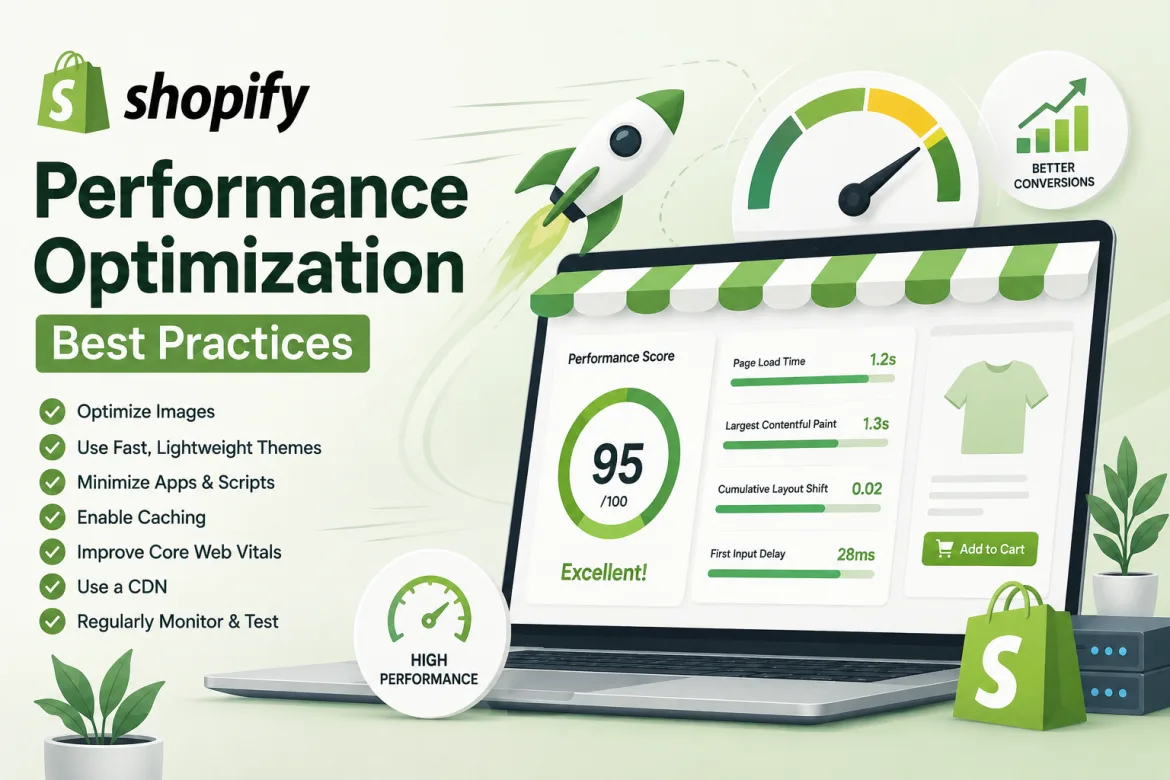
In today’s competitive eCommerce world, website performance is vital to deciding business success. Customers want online retailers to load quickly, run smoothly, and offer a consistent buying experience across all devices. Even a minor delay in page loading can raise bounce rates, lower consumer happiness, and hurt sales. For Shopify site owners, performance optimization is no longer an option; it is now required for long-term growth.
Shopify creates a solid foundation for online businesses by providing secure hosting, dependable infrastructure, and built-in performance enhancements. However, many business owners accidentally slow down their websites by using large graphics, numerous software, poorly designed themes, and unneeded customizations. These flaws can affect both user experience and search engine rankings, making it more difficult to acquire and convert clients.
Performance optimization aims to make the shopping experience faster, smoother, and more efficient. Businesses that allow customers to browse products, add items to their carts, and finish purchases quickly are more likely to improve conversions and establish customer loyalty. Understanding and applying Shopify performance optimization best practices can help businesses increase revenue while keeping a competitive advantage.
Understanding Shopify Performance Optimization
Shopify performance optimization is the process of increasing the speed, responsiveness, and general efficiency of a Shopify store. It entails optimizing a variety of features such as graphics, code, themes, apps, and server interactions to guarantee that clients have fast site loads and easy navigation. The ultimate goal is to eliminate friction during the purchasing process.
A quick Shopify store gives a good first impression. Research regularly shows that users build opinions about websites in seconds. If a store takes too long to load, customers may leave without browsing the products. This affects both immediate sales prospects and long-term consumer acquisition attempts.
Search engines also consider website performance while calculating rankings. Google views page speed and user experience as crucial ranking factors. Faster stores frequently have higher visibility in search results, which leads to more organic traffic and better business growth potential.
Performance improvement is not a one-time project. As a company adds more goods, apps, marketing tools, and content, performance may steadily degrade. Regular monitoring and optimization guarantee that the store continues to provide an exceptional customer experience while meeting business objectives.
Why Shopify Store Speed Matters
Store speed has a direct impact on customer behavior. With so many options available to online customers, patience is becoming increasingly restricted. If users encounter slow-loading pages, they may abandon the site and buy from competitors who provide a speedier experience.
A speedy website increases conversion rates by decreasing friction along the client path. When product pages load quickly and checkout processes run smoothly, buyers are more likely to complete purchases. Faster websites typically have greater average order values and lower cart abandonment rates.
Performance also affects mobile shoppers, who now account for a sizable amount of eCommerce traffic. Mobile users commonly browse while traveling or using several internet connections. Under these situations, optimized Shopify stores operate better, providing a consistent shopping experience across all devices.
Additionally, website speed influences brand perception. Customers commonly connect fast-loading websites with professionalism, dependability, and trustworthiness. A high-performing Shopify site can boost client confidence and drive repeat purchases over time.
Optimizing Images for Faster Loading
Images are frequently the major contributors to Page Weight in Shopify stores. High-quality product pictures are essential, but unoptimized photos can dramatically slow down loading times. Finding the ideal balance between visual quality and performance is critical to success.
Store owners should compress their photographs before sending them to Shopify. Modern compression technologies can significantly reduce file sizes while preserving high visual quality. Smaller picture files use less bandwidth and load more quickly for visitors.
Selecting proper image formats also boosts performance. Modern formats, such as WebP, frequently offer superior compression than classic JPEG or PNG files. Using responsive graphics ensures that customers receive visuals that are suitably sized for their device and screen resolution.
Regular image audits can assist discover big files that have been uploaded over time. Businesses can maintain peak website speed while preserving product presentation by analyzing picture libraries and replacing unnecessary big files.
Choosing a Lightweight Shopify Theme
The theme serves as the foundation for all Shopify stores. While visually appealing themes may include many elements and animations, they can also cause performance issues if not properly tuned.
A lightweight theme emphasizes efficiency, good coding methods, and fast loading times. Such themes often use fewer resources, allowing pages to load faster while yet keeping a professional appearance. Choosing a performance-driven theme has long-term advantages for both consumers and search engines.
Businesses should thoroughly analyze themes before implementing them. Demo stores may look appealing, but measuring actual loading performance can uncover significant speed issues. Reviewing theme documentation and performance metrics might help you make smarter decisions.
Customizations should be approached strategically. Excessive alterations may bring unneeded code and functionality, which reduces speed. Keeping a balance between design needs and performance factors aids in achieving best results.
Managing Shopify Apps Effectively
Shopify apps enhance store functionality and improve several aspects of business operations. However, adding too many apps might harm website speed and slow down the user experience. A balanced strategy is necessary to ensure speed and efficiency.
Each app frequently includes scripts, stylesheets, and external requests, which lengthen site load times. These minor additions might pile up over time and have an impact on overall site performance. Regular app inspection helps keep the store clean and optimized.
- Regularly remove unneeded or superfluous apps.
- Prevent app functionality from overlapping.
- Select multi-functional and high-quality apps.
- Track performance after installing new apps.
Before installing any new app, organizations should always examine how it may affect speed and performance. Testing in a controlled environment can help avoid unanticipated problems. Maintaining app efficiency leads to a better user experience and longer-term store stability.
Minimizing Third-Party Scripts
Third-party scripts are commonly used for analytics, advertising, customer support, reviews, and marketing automation. While these tools provide valuable insights and functionality, excessive script usage can negatively impact performance.
Each script needs additional resources and may rely on external servers. If these servers react slowly, the whole site performance may suffer. Customers face delays even when the Shopify infrastructure is running properly.
Businesses should conduct frequent audits of all third-party integrations. Identifying unused or obsolete scripts helps to reduce unwanted performance demands. Every script should serve a clear business goal and provide measurable value.
Loading scripts wisely can also boost speed. Non-essential scripts can sometimes be deferred or loaded after key page content displays, allowing consumers to interact with the website faster.
Improving Mobile Performance
Mobile optimization has become a critical component of Shopify’s performance strategy. With an increasing number of customers purchasing on smartphones and tablets, providing a speedy mobile experience is key to success.
Mobile users frequently have slower network connections than desktop users. As a result, even tiny performance improvements on desktop computers can have a large impact on mobile experiences. Optimizing content delivery is especially crucial.
Design minimalism dramatically improves mobile performance. Excessive animations, huge graphics, and sophisticated layouts might cause excessive delays. Streamlined mobile experiences frequently outperform feature-heavy designs in terms of speed and conversion.
Regular testing on multiple devices aids in the identification of mobile-specific issues. Understanding how pages function in real-world scenarios enables organizations to make focused modifications that increase consumer satisfaction and engagement.
Leveraging Browser Caching and Content Delivery Networks
Browser caching allows returning users to view website material more rapidly by saving specific files locally on their devices. This avoids the need to download the same resources many times during subsequent visits. It ultimately increases browsing speed and efficiency.
Shopify currently has a robust performance infrastructure, which includes built-in Content Delivery Network (CDN) support. CDNs distribute material across numerous global servers, shortening the path between users and website data. This ensures faster and more consistent loading times. CDNs can help accelerate content delivery.
- Store static files on user devices.
- Reduce recurring data downloads for returning users.
- Use a worldwide CDN to accelerate content delivery.
- Optimize loading speed for overseas visitors.
This approach greatly increases performance for worldwide audiences by delivering material from nearby servers. Faster load speeds improve the user experience and lower bounce rates. It also raises the likelihood of greater engagement and conversions across areas.
Key Factors That Influence Shopify Performance
Several things influence how well a Shopify store performs. Understanding these characteristics enables firms to properly prioritize their optimization efforts, focusing on adjustments that have the biggest impact on speed, usability, and conversion rates.
Key performance indicators include:
- Improved theme quality and coding efficiency.
- Optimal image size and file optimization.
- The number and effect of installed Shopify apps.
- Enhancing mobile responsiveness and user experience.
- Evaluated performance of third-party scripts and integrations.
Monitoring these elements on a regular basis helps to maintain consistent website performance and prevent gradual erosion over time.
Common Shopify Performance Mistakes
Many firms unwittingly make mistakes that have a negative influence on shop performance. Recognizing these flaws can help you avoid costly user experience issues and missed sales opportunities.
Common performance errors include:
- Uploading unnecessarily huge images.
- Installing several apps without review.
- Using complex themes with superfluous features.
- Failure to eliminate unneeded code.
- Neglecting frequent performance tests.
Avoiding these issues can greatly increase website speed and provide a more satisfying consumer experience.
Monitoring Performance Metrics
Continuous measurement and analysis should help to assist optimization efforts. Without monitoring, firms may fail to spot emerging performance issues or assess the efficacy of adjustments.
Performance metrics provide essential information about user experiences. Tracking loading speeds, page responsiveness, and client behavior might help identify areas for additional optimization. Data-driven decision-making generates more effective performance methods. Google PageSpeed Insights can be used to evaluate website performance.
Businesses should incorporate frequent performance reviews into their operational operations. Regular audits guarantee that new content, apps, and upgrades don’t cause unforeseen performance issues.
Monitoring also enables continued development. As customer expectations shift and technology evolves, constant measurement enables organizations to remain competitive and responsive to changing market needs.
The Future of Shopify Performance Optimization
The future of Shopify performance optimization will be influenced by rising customer demands and technological improvements. Customers will continue to want speedier, more seamless purchasing experiences, regardless of device or location.
Artificial intelligence and automation are projected to play a greater role in performance management. Intelligent optimization technologies can automatically identify bottlenecks, offer changes, and implement specific modifications without requiring significant manual interaction.
Mobile-first experiences will remain a top priority. As mobile commerce grows, firms must focus on developing lightweight, efficient experiences tailored exclusively to smartphone customers.
Sustainability considerations may have an impact on future optimization efforts. Efficient websites use less resources, spend less energy, and promote environmentally responsible corporate practices while also improving user experiences.
Practical Tips for Long-Term Performance Success
Performance optimization should be a continuous business practice rather than a one-time technological exercise. Consistent focus on website efficiency contributes to long-term success.
Businesses should establish explicit performance criteria and compare each new addition to those benchmarks. When launching a new software, design feature, or marketing tool, performance consequences must always be considered.
Collaboration across the marketing, design, development, and management teams increases optimization results. When all stakeholders recognize the value of speed, performance-driven choices become a part of daily operations.
Long-term success is ultimately achieved by striking a balance between functionality, esthetics, and speed. This balance allows stores to provide improved consumer experiences while still enabling long-term corporate success.
Conclusion
Shopify performance optimization is one of the most beneficial investments that an eCommerce company can undertake. Faster websites improve the user experience, increase conversion rates, improve search engine exposure, and boost overall customer happiness. Businesses may establish exceptional-performing stores by focusing on image optimization, theme selection, app administration, mobile performance, and constant monitoring.
Technical enhancements, theme optimization, image compression, and expert coaching are all required to optimize Shopify performance. Businesses looking for competent Shopify specialists can use the TopITFirms Shopify Directory to find verified Shopify development agencies.