

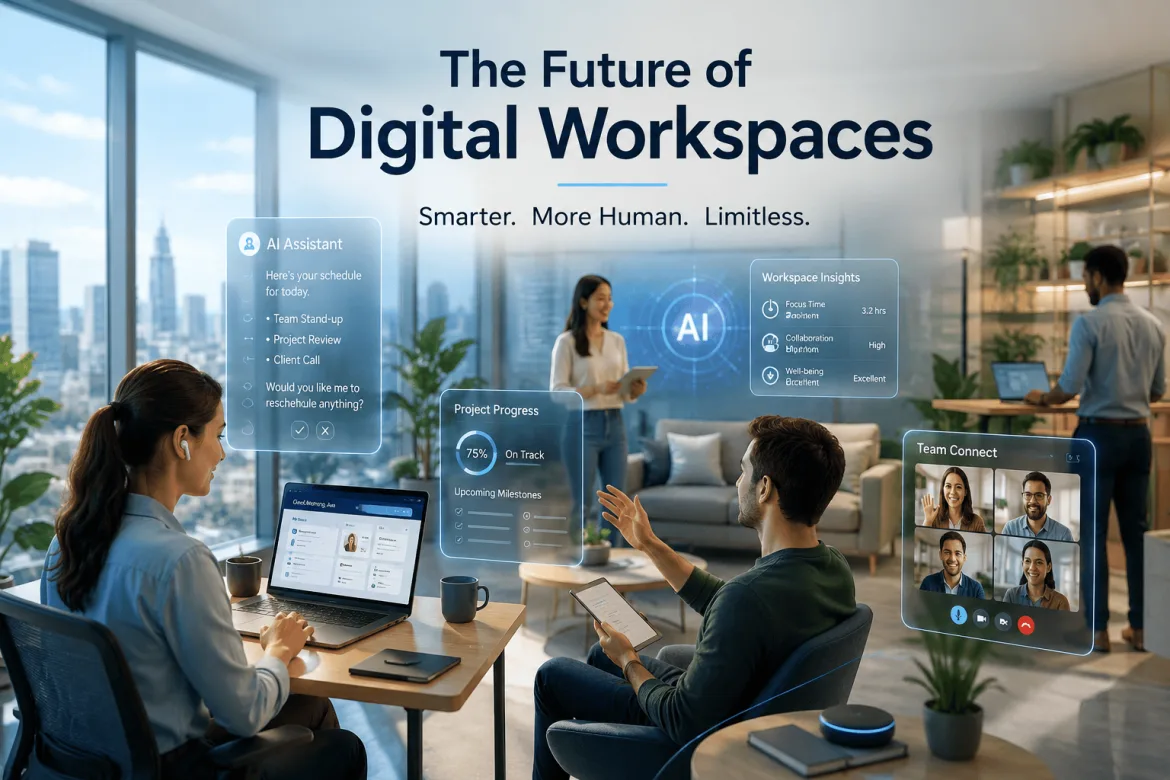
By 2026, the modern workplace will have transitioned into a digital-first paradigm. Companies are now focusing on making workspaces smarter, faster, and more secure by leveraging cloud, AI, and automation. Connectivity and technology are now the focal points of the workplace, rather than physical workplaces. Businesses are choosing efficiency and flexibility with digital systems.
Digital workplaces are being used to power startups, SMEs, and organizations around the world. Teams work together using cloud platforms, real-time tools, and integrated systems. Automation and artificial intelligence (AI) reduce manual labor and increase production. This change allows for scalable and flexible operations across worldwide teams.
Organizations are investing in safe, AI-powered, hybrid-ready infrastructure. Cybersecurity, integration, and collaboration tools are increasingly necessary. Intelligent, linked, and scalable digital environments define the workplace of the future.
What Is a Digital Workspace?
A digital workspace is a centralized virtual environment that allows employees to access applications, communication tools, data, and workflows from any device or location. It integrates collaborative platforms, cloud infrastructure, cybersecurity systems, automation tools, and business applications to provide a seamless experience.
Unlike typical office layouts, digital workplaces enable firms to be more agile and flexible. Employees can work remotely, collaborate in real time, automate repetitive processes, and securely access company resources without having to be physically present in the office.
Modern digital workspaces often include:
- Cloud storage and computing platforms.
- Project management systems.
- AI-enabled productivity tools.
- Team collaboration software.
- Providing cybersecurity and identity management solutions.
- Workflow automation systems.
- Use virtual meeting platforms.
- Centralized communication tools.
The goal is straightforward: to increase efficiency, streamline processes, and build a more connected workforce.
Why Digital Workspaces Are Becoming Essential in 2026
The Rise of Hybrid Work Models
Hybrid work is no longer a fad; it is now the mainstream operating model for many firms. Employees expect flexibility, and businesses understand that productivity is no longer dependent on physical presence.
Organizations are already developing infrastructure to enable seamless transitions between the office, home, and remote locations. Digital workspaces enable this by providing employees with consistent access to tools and information, regardless of location.
Businesses that implement hybrid models report benefits such as:
- Increased employee satisfaction.
- Reduced operational costs.
- Improved talent acquisition.
- Improved work/life balance.
- Increased productivity.
Hybrid work also allows startups and SMEs to access global talent without regard to geography.
For additional guidance on hybrid and flexible work, businesses can explore Microsoft’s hybrid work guides.
Increasing Dependence on Cloud Technology
Cloud services are the foundation of modern digital workspaces. Businesses are shifting away from traditional on-premise systems and toward cloud-based infrastructure because it provides scalability, flexibility, and cost savings.
Cloud computing allows enterprises to:
- Ensure secure storage and access to data.
- Scale operations quickly.
- Support remote teams.
- Improve disaster recovery capability.
- Reduce hardware costs.
- Improve cross-departmental collaboration.
Multi-cloud and hybrid-cloud setups will become more popular by 2026, as enterprises strive for improved performance and operational resilience.
AI Is Transforming the Future Workplace
AI-Powered Productivity and Collaboration
Artificial intelligence is transforming the way teams work. AI solutions have evolved beyond chatbots and data dashboards. They are now responsible for everyday operations, project management, content development, customer service, scheduling, and workflow optimization.
AI-driven digital workspaces can:
- Summarize meetings automatically.
- Create reports and insights.
- Prioritize tasks intelligently.
- Identify workflow inefficiencies.
- Improve team communication.
- Provide predictive business analytics.
Sales teams, for example, utilize AI to monitor client behavior and automate follow-ups, whereas human resources departments use AI-powered tools to attract and engage employees.
Businesses that integrate AI into their workspaces get a competitive advantage by increasing speed, efficiency, and decision-making.
Intelligent Automation Reducing Manual Work
Automation has been a major driver of workplace efficiency. Intelligent automation solutions have made it possible to execute repetitive administrative work in minutes rather than hours.
Common automated use cases include:
- Invoice processing
- Onboarding employees.
- Route customer support tickets.
- Managing inventory.
- Email workflows
- Data synchronization.
- Compliance reporting.
Employees can devote more time to strategic and creative projects by minimizing manual burdens.
Cybersecurity Will Define Trust in Digital Workspaces
Why Cybersecurity Is More Important Than Ever
As businesses become increasingly digitally connected, cybersecurity threats increase. Remote access, cloud systems, and connected gadgets all provide more attack surfaces for cybercriminals.
Businesses will invest extensively on advanced cybersecurity measures by 2026 to protect sensitive data, ensure compliance, and maintain customer trust.
A secure digital workstation should contain:
- Multi-factor authentication (MFA)
- Zero-trust security architecture.
- Endpoint protection systems.
- Encrypted communication channels.
- Real-time threat monitoring.
- Provide employee cybersecurity training.
- Protect cloud storage.
For more information about zero-trust security architecture, see NIST’s Zero Trust Architecture guidance.
Cybersecurity is no longer just an IT responsibility. It has become a company-wide priority.
Real-World Example: Financial Sector Transformation
Banks and fintech organizations are among the most active users of secure digital workspaces. Financial institutions today deploy encrypted collaboration tools, AI-powered fraud detection, and cloud-based infrastructure to secure distant operations.
These technologies allow teams to work globally while adhering to stringent regulatory compliance and safeguarding customer data.
Cloud-Based Workspaces Are Driving Scalability
Scalability for Growing Businesses
Scalability is one of the most significant advantages of digital workspaces. Businesses can grow operations, hire more staff, and launch new services without having to rebuild their infrastructure from start.
Cloud-based systems enable enterprises to:
- Add users instantly.
- Increase storage capacity based on demand.
- Integrate new software tools.
- Support international teams.
- Establish cost-effective operations.
This adaptability is especially useful for startups and fast-growing businesses.
Business Continuity and Disaster Recovery
Traditional office systems frequently struggle during disturbances. Digital workspaces include built-in redundancy and cloud backups to maintain operational continuity during cyberattacks, power outages, and natural catastrophes.
Businesses that invest in resilient digital infrastructure have fewer downtimes and recover faster from unanticipated incidents.
Choosing the Right IT Service Provider
Why the Right Technology Partner Matters
Technology alone does not ensure success. Businesses require reliable IT partners who understand scalability, security, digital transformation, and operational effectiveness. Choosing the wrong supplier might result in security flaws, downtime, integration challenges, and more expenditures.
The correct IT service provider assists businesses:
- Develop scalable digital infrastructure.
- Implement cloud migration techniques.
- Increase cybersecurity readiness.
- Integrate AI and automation tools.
- Maintain compliance standards.
- Offer continuing technical support.
A reliable technology partner is a valuable tool for expanding enterprises.
Key Factors Businesses Should Consider
Industry Experience
Every industry has different operational requirements. Businesses should select providers who have demonstrated experience in their specific sector.
Healthcare enterprises, for example, must use HIPAA-compliant systems, whereas banking institutions require extensive regulatory security controls.
Scalability and Flexibility
Technology requirements change frequently. Businesses should ensure that their providers can handle future growth, cloud expansion, and digital transformation activities.
Security Standards
Cybersecurity capabilities should be a key priority in the evaluation process. Providers should provide robust security frameworks, certifications, and proactive monitoring mechanisms.
Integration Capabilities
Modern enterprises rely on numerous platforms and software solutions. IT companies should enable a smooth integration of tools, cloud services, and current infrastructure.
Support and Reliability
Reliable technical support is crucial for reducing downtime and operating disruptions. Businesses should assess response times, service level agreements, and customer support quality.
Common Mistakes Businesses Should Avoid
Focusing Only on Cost
One of the most common mistakes firms make is selecting technological solutions exclusively on the basis of cost. Low-cost services may lack scalability, support quality, or security features.
Ignoring Cybersecurity During Expansion
Rapid digital change frequently causes security weaknesses. Expanding cloud systems without strong cybersecurity safeguards can expose enterprises to considerable risks.
Using Too Many Disconnected Tools
Many firms implement several software platforms without sufficient integration strategy. This creates communication silos, lowers productivity, and complicates workflows.
Underestimating Employee Training
Even the best technological solutions fail unless they are properly adopted by employees. Businesses should spend in onboarding, training, and change management to optimize the effectiveness of their digital workspaces.
Digital Workspaces and Business Transformation
Faster Decision-Making Through Data
Modern digital workspaces offer firms real-time analytics and consolidated data access. Decision-makers may monitor operations, measure performance, and identify opportunities more effectively. This increases visibility across teams and allows for faster, more informed business decisions.
In 2026, data-driven decision-making will be essential for competitiveness. Businesses that use real-time analytics can adapt swiftly to market developments and client demands. It also assists firms in lowering risks, improving performance, and maintaining a strong competitive advantage.
Global Collaboration Without Boundaries
Digital workspaces remove geographical barriers. Teams may collaborate across borders and time zones while being productive and operationally consistent. This allows for smooth communication via cloud-based tools and real-time collaborative platforms. It also allows firms to hire global talent without regard to geography, hence increasing flexibility and scalability.
This capability allows businesses to:
- Hire international talent.
- Expand to worldwide markets.
- Offer 24/7 client support.
- Increase operational agility.
Global accessibility opens up chances for startups and SMEs that were previously only available to major firms.
The Future Outlook for Digital Workspaces
The future of digital workspaces will change as AI, cloud computing, automation, and cybersecurity technologies advance. Businesses will put more emphasis on establishing intelligent, adaptive, and employee-centric digital environments.
Future digital workstations are likely to include:
- AI-enabled workflow orchestration.
- Predictive cybersecurity systems.
- Provide highly tailored employee experiences.
- Advanced automation ecosystems.
- Immersive virtual collaboration spaces.
- Sustainable and energy-efficient cloud infrastructure.
Organizations that embrace innovation early will be better able to compete in increasingly digitized global markets.
Conclusion
The future of digital workspaces extends beyond remote work and cloud tools, signaling a major shift in how firms function and create. In 2026, businesses will be developing safe, AI-powered, and scalable digital ecosystems that boost productivity, flexibility, and resilience. From startups to organizations, IT infrastructure is now critical to driving growth and improving the consumer experience.
Organizations that invest in automation, cybersecurity, cloud scalability, and unified collaboration platforms are better positioned to face future problems. Choosing the correct technology and IT service partner is also critical, as it ensures a smooth installation, lower risks, and long-term operational efficiency.