

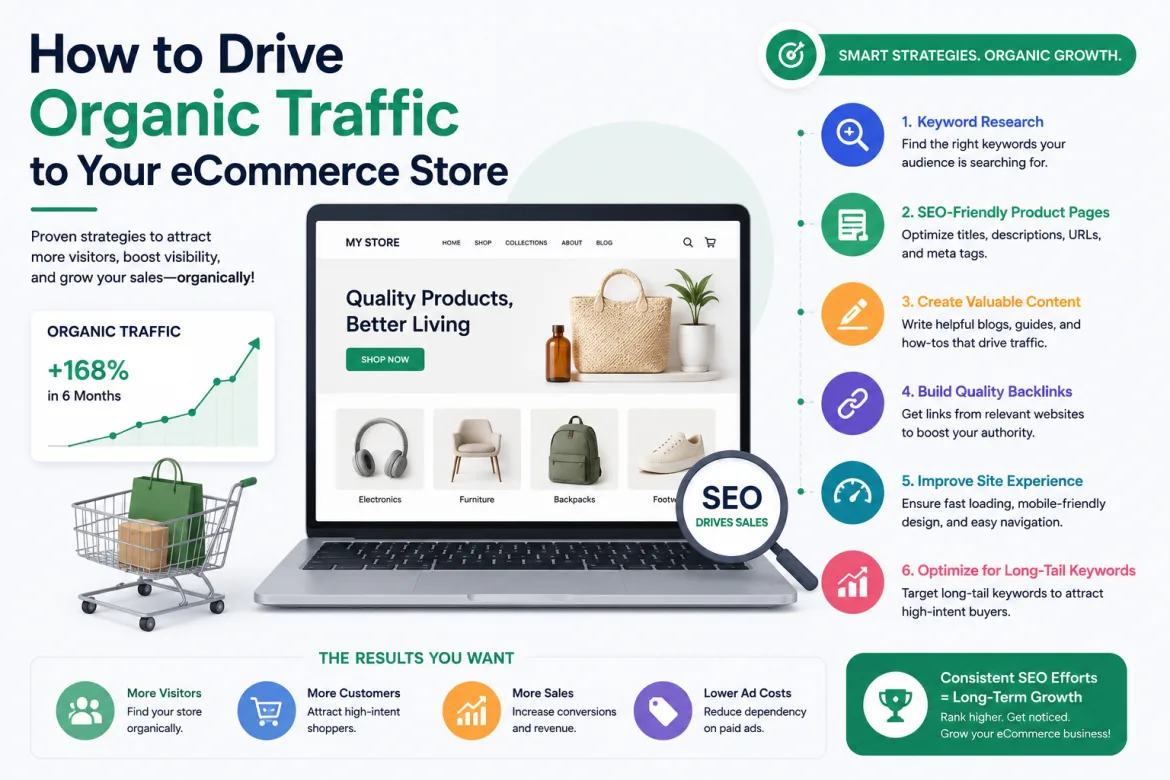
In today’s competitive digital industry, attracting customers to your eCommerce site is more difficult than ever. While paid advertising might produce quick traffic, it frequently requires a consistent expenditure to maintain results. Organic traffic, on the other hand, comes from search engines and can supply a consistent stream of potential clients without incurring continuing advertising costs.
Organic traffic is valuable since it is made up of individuals who are actively looking for products, solutions, or information related to your organization. These visitors frequently have a higher intent to purchase than individuals who come to your business through marketing. As a result, organic traffic can help drive long-term revenue growth and client acquisition.
Building organic traffic necessitates a combination of search engine optimization (SEO), content production, technical enhancements, and customer-centric initiatives. Although the effects take time to show, the long-term benefits include improved visibility, stronger brand reputation, cheaper customer acquisition costs, and sustainable business growth. Investing in organic traffic is one of the best marketing options for eCommerce organizations who want to scale efficiently.
Understand What Your Customers Are Searching For
Understanding client search behavior is the first step toward increasing organic traffic. Before you can optimize your store, you must first determine the keywords and phrases that potential customers use while searching for products similar to yours. These search phrases assist search engines decide whether your pages are relevant to user searches.
Keyword research enables firms to understand what their target customer is looking for at various phases of the purchasing process. Some people may be investigating products, while others may be about to make a purchase. Understanding these distinctions enables you to build content and product pages that are consistent with client intent.
Instead of focusing just on broad keywords like “running shoes” or “office furniture,” consider more precise phrases that represent client wants. For example, searches for “best running shoes for beginners” or “ergonomic office chair for back pain” frequently suggest more purchasing intent and less competition.
Many successful eCommerce firms conduct regular analyzes of search patterns and consumer behavior to fine-tune their keyword strategy. By continuously targeting relevant keywords across your website, you can increase search visibility and attract people who are more likely to become buyers.
Optimize Product Pages for Search Engines
Product pages are one of the most valuable elements of an eCommerce website. Unfortunately, many online retailers rely on manufacturer-provided descriptions, which can result in redundant material and lower search visibility. Creating distinctive product descriptions helps search engines comprehend your products while also offering useful information to customers.
A well-optimized product page should include:
- Clear and keyword-focused product titles
- Unique and informative product descriptions
- High-quality product images with descriptive alt text
- Customer reviews and ratings
- Frequently asked questions related to the product
Product pages should explain product benefits, not simply features. Clear descriptions of how the product solves consumer problems or enhances their experience can boost engagement and conversions.
Including relevant facts like sizing recommendations, usage directions, comparisons, and customer feedback enhances both the user experience and SEO. Regularly updating product pages with new material improves search relevancy and keeps your store competitive in search results.
Create Valuable Content Around Your Products
Content marketing is still one of the most efficient strategies to get organic traffic. Instead of merely focusing on product sales, organizations can generate content that educates, informs, and assists potential customers in issue solving.
For example, if you offer fitness equipment, you can write about workout regimens, fitness goals, equipment comparisons, and exercise techniques. These subjects attract customers who may not be ready to buy right away but are interested in your sector.
Educational content helps to position your brand as a reliable source of information. When clients find relevant content on your website, they are more likely to return when they are ready to buy.
Blog pieces, buying guides, tutorials, videos, and FAQs can all help with organic visitor increase. Every piece of content increases your website’s chances of appearing in search results and reaching potential clients.
Over time, a great content library can become a significant source of traffic and leads. Many successful eCommerce firms create thousands of monthly visitors by providing content that answers client questions and interests.
Improve Website Speed and User Experience
Search engines prioritize websites that provide a quick and seamless user experience. Slow-loading pages can annoy visitors, raise bounce rates, and harm search rankings, making website performance an important consideration for eCommerce success.
Website speed has a significant impact on consumer happiness and conversion rates. Even a minor delay in page loading can drive potential customers to abandon your store and choose a competitor instead.
Improving website performance include optimizing pictures, removing extraneous scripts, choosing reputable hosting, and fine-tuning website code. These improvements make pages load faster and provide a more enjoyable surfing experience for users.
Mobile optimization is also vital, since many customers explore and buy things on their cellphones. A responsive, user-friendly website encourages visitors to explore other products, aids SEO efforts, and boosts the likelihood of conversions and repeat sales.
For additional information about website performance, refer to Google PageSpeed Insights.
Focus on Technical SEO Fundamentals
Technical SEO allows search engines to crawl, interpret, and index your website more efficiently. Even high-quality content may struggle to rank well if it lacks a solid technical foundation.
Many eCommerce websites encounter technological difficulties such as duplicate content, broken links, poor site structure, and indexing concerns. Solving these issues can greatly enhance search visibility and user experience.
Some important technical SEO practices include:
- Creating and submitting an XML sitemap
- Fixing broken links and error pages
- Using secure HTTPS connections
- Improving site navigation structure
- Ensuring mobile responsiveness
A well-organized website structure, complete with distinct categories, straightforward navigation, and optimized URLs, allows users and search engines to more efficiently access your information. Regular technical SEO audits can help detect and repair issues before they affect performance. Maintaining a strong technical basis contributes to higher rankings and long-term organic growth.
Businesses can also use Google Search Console to monitor search performance and identify potential indexing or search visibility issues.
Build High-Quality Backlinks
Backlinks are links from other websites pointing to your eCommerce store. Search engines frequently interpret these links as endorsements of your material and authority. High-quality backlinks can greatly boost search ranks and referral traffic.
Not every backlink is equally important. Links from credible and relevant websites are more valuable than links from low-quality or unrelated sources. As a result, firms should prioritize obtaining quality backlinks over acquiring a big number of them.
One effective method is to create valuable material that others will want to reference and share. Backlinks from blogs, journals, and industry websites are frequently used to promote industry reports, research studies, expert guides, and unique insights.
Collaborating with influencers, partaking in guest blogging opportunities, and cultivating relationships within your sector can all help you earn authoritative backlinks. These collaborations frequently generate mutual value while boosting your internet presence.
For example, an eco-friendly product store may receive backlinks from sustainability blogs, environmental groups, and green living periodicals. Such links not only increase SEO but also boost brand reputation with target audiences.
Optimize Category Pages for Better Visibility
Many eCommerce businesses focus on product pages, but category sites are also vital for SEO. These sites frequently target broader search terms and help categorize related products, making them useful for increasing organic visitors.
Category pages are typically used by users who are still investigating their alternatives rather than searching for a specific product. Optimizing these pages attracts potential clients earlier in the purchasing process and encourages further research of your store.
A good category site should include descriptive content, keyword-focused headlines, product filters, and relevant information to assist customers find the proper products. This added content enhances the user experience while also helping search engines better grasp the page.
For example, a “Men’s Running Shoes” category page may feature purchasing suggestions, product recommendations, and information about various shoe types. Well-optimized category pages can help boost rankings, increase organic traffic, and direct customers to related products more efficiently.
Leverage Customer Reviews and User-Generated Content
Customer reviews and user-generated content help eCommerce SEO by providing fresh, authentic material to your website. They help to create trust, increase product relevancy, and impact purchasing decisions, all while offering useful information to both shoppers and search engines.
- Improve Search Relevance
- Build Customer Trust
- Encourage User-Generated Content
- Generate Fresh Content Regularly
A rich collection of customer-generated content can improve search rankings, engagement, and conversion rates over time.
Use Internal Linking Strategically
Internal linking connects multiple pages within your eCommerce site, providing a logical path for both visitors and search engines. It is vital for distributing authority throughout your website.
Internal links lead users to relevant items, blog posts, or category pages, which encourages them to explore your website further. This can improve engagement and lower bounce rates.
A blog post about skincare routines, for example, may include links to skincare products, ingredient guides, and category pages. These relationships bring value while aiding SEO efforts.
Internal links also assist search engines comprehend how different pages on your website are related. This greater understanding can lead to better indexing and rankings.
A thorough internal linking strategy improves navigation, user experience, and the visibility of key pages throughout your eCommerce business.
Monitor Performance and Continuously Improve
Organic traffic growth requires ongoing effort. Search engine algorithms, client preferences, and market trends are continuously changing, making continuing optimization critical to long-term success.
Monitoring performance enables firms to discover what works and where adjustments are required. Data-driven decisions are frequently associated with more effective SEO methods and improved long-term results.
Important metrics to monitor include organic traffic, keyword rankings, conversion rates, bounce rates, average session time, and top-performing pages. These insights show how users engage with your website and where opportunities exist.
Regular analysis can help identify content gaps, technical concerns, and emerging keyword opportunities. Businesses that regularly evaluate performance data are better able to adjust to changing market conditions.
Successful eCommerce firms see SEO as a long-term investment rather than a one-time campaign. Continuous improvement helps to maintain awareness, attract new clients, and support long-term growth.
Key Factors for Driving Organic Traffic to Your eCommerce Store
Several elements influence an eCommerce store’s ability to generate and sustain organic visitors. Businesses that concentrate on these areas are more likely to experience constant search visibility and long-term growth.
- High-Quality Content: Creating informative blogs, buying guides, FAQs, and product descriptions helps attract visitors and improve search rankings.
- Keyword Optimization: Using relevant keywords naturally throughout product pages, category pages, and content helps search engines understand your website.
- Website Speed and Performance: Fast-loading pages improve user experience and reduce bounce rates, both of which can positively impact SEO.
- Mobile-Friendly Design: Since many shoppers browse on mobile devices, responsive design is essential for both rankings and conversions.
Businesses that regularly improve these qualities can gradually establish a stronger web presence and attract more quality organic traffic.
Common Mistakes That Limit Organic Traffic Growth
Many eCommerce businesses invest time and resources in SEO yet still struggle to achieve significant organic traffic growth. This is frequently due to preventable errors that diminish search visibility and limit the overall effectiveness of their strategy.
Understanding these typical SEO difficulties is critical for developing a more successful and long-lasting approach to organic development. Businesses may improve their performance and attract more qualified visitors by detecting and fixing issues early on.
- Ignoring Keyword Research
- Using Duplicate Product Descriptions
- Neglecting Mobile Optimization
- Publishing Low-Quality Content
Avoiding these blunders will help your eCommerce store attract more organic visitors, enhance search rankings, and promote long-term business success.
Conclusion
Driving organic traffic to your eCommerce business necessitates a consistent strategy that includes understanding consumer search intent, optimizing product pages, creating relevant content, and ensuring good technical SEO. These initiatives increase search prominence and help to attract qualified visitors who are actively looking for your product.
Unlike paid advertising, organic traffic provides long-term value and promotes sustainable growth. By focusing on consumer demands, delivering relevant content, and constantly upgrading your website and SEO approach, you can create a consistent source of traffic that drives long-term success.