

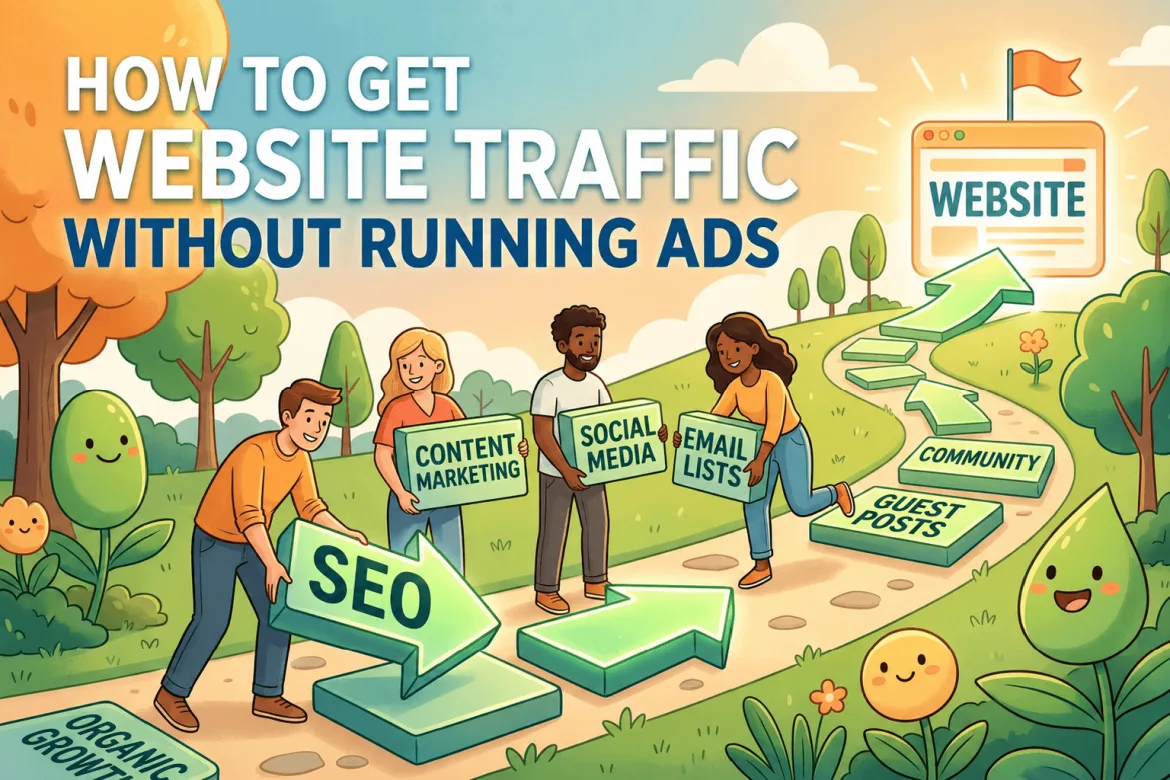
Many business owners believe that website traffic is solely derived from paid advertising. While advertisements might yield immediate results, they are not the only way to attract visitors online. In fact, many successful businesses derive the majority of their website traffic from organic marketing methods that deliver returns long after the first effort is made.
Learning how to increase website traffic without running advertisements is extremely critical for startups, small businesses, and developing brands looking to achieve long-term growth without constantly raising their marketing budget. Organic traffic promotes trust, increases brand visibility, and frequently attracts customers who are genuinely interested in your products or services.
The good news is that there are various tried-and-true strategies for organically growing website traffic. Businesses can get consistent traffic without employing paid ads by focusing on search engine optimization, content creation, audience engagement, and user experience.
Focus on Search Engine Optimization (SEO)
Search Engine Optimization (SEO) is still one of the most effective strategies to drive website visitors without advertising. SEO assists search engines in understanding your website and ranking your pages higher when users look for relevant information. The higher your content ranks, the more likely you are to get visitors organically.
Understanding what your target audience searches for is the first step in developing an effective SEO strategy. Rather than selecting broad keywords, concentrate on narrow search phrases that represent user intent. When your content addresses actual questions and provides important solutions, search engines are more likely to give it higher prominence.
- Keyword research based on user intent
- Optimized page titles and meta descriptions
- Proper heading structure using H1, H2, and H3 tags
- Image optimization and internal linking
- Technical SEO improvements and regular content updates
For additional guidance, businesses can refer to Google’s SEO Starter Guide for information about improving website performance in Google Search.
Search engine optimization is not a one-time task. Businesses that constantly enhance their websites and offer great content frequently see long-term traffic increase without incurring the ongoing expenditures associated with advertising.
Create High-Quality Content Consistently
Content marketing is one of the most effective strategies to automatically attract people. Every piece of useful content adds another possibility for individuals to find your company via search engines, social media, and referrals. Quality content not only increases traffic, but it also defines your business as a reliable source of information.
The most successful organizations develop content that solves issues, answers questions, and enables their customers to make informed decisions. Instead of focusing simply on advertising material, prioritize instructive and informative content that adds real value.
Blog pieces, ultimate guides, case studies, industry reports, checklists, templates, comparison articles, and resource sites are all examples of traffic-generating content forms.
A digital marketing agency, for example, may provide SEO, content marketing, and social media strategy guides. A software vendor may publish tutorials to assist users in resolving common issues. Valuable content motivates people to come back, share your resources, and interact with your business over time.
Use Content Clusters to Build Authority
While publishing individual blog posts might generate traffic, content clusters frequently produce greater long-term effects. A content cluster is a collection of linked articles organized around a single topic. This structure helps search engines grasp your knowledge and boosts the authority of your website.
For example, if your primary focus is digital marketing, you could write a thorough guide to SEO and then supplement it with extensive articles on keyword research, technical SEO, link building, local SEO, and content optimization. These articles should be linked together internally so that visitors may simply find similar content.
Content clusters improve the user experience by allowing users to find several resources on the same topic in one place. At the same time, search engines recognize your level of experience, which can help you rank higher and enhance total website traffic.
Leverage Internal Linking Effectively
Internal linking is a basic yet extremely effective approach for improving SEO performance and increasing website engagement. It helps users go from one site to the next, allowing them to discover relevant content that enhances their search experience.
A solid internal linking structure enables readers to navigate various pages and improves the overall organization of your website. These links also assist search engines in determining content linkages and allocating authority across relevant pages.
Every time new content is produced, look for ways to connect it to relevant current sites and create a stronger, more organized content ecosystem.
Optimize for Featured Snippets and AI Search
Search engines are continuously developing, and many users now get their answers directly from highlighted snippets and AI-powered search results. This means that businesses can obtain awareness even before visitors click on traditional website listings, emphasizing the importance of content structuring.
To boost your chances of landing in these prominent spots, respond to typical customer questions simply and directly. Well-organized content with descriptive headings and brief explanations enables search engines to easily understand and extract valuable information.
As AI-powered search grows more widespread, websites that consistently deliver accurate, useful, and trustworthy information can gain crucial organic prominence.
- Provide direct and clear answers to common user questions
- Use structured headings to improve content readability
- Keep explanations concise and easy to extract
- Focus on accuracy, clarity, and trustworthiness
- Create helpful content that serves real user intent
Businesses can also review Google Search Central’s Search Appearance documentation to understand how content can appear across different Google Search features.
Build a Strong Social Media Presence
When used strategically, social media platforms can serve as useful traffic generators. Instead of relying solely on promotions, organizations could include instructional content, industry updates, success stories, and helpful tools to increase engagement.
A good social media presence promotes your content to new audiences and increases the likelihood that people will visit your website. Consistent publishing and meaningful conversation can gradually establish a loyal following for your brand.
Publishing fresh blog posts, industry advice, repurposing long-form material, responding to comments, publishing customer testimonials, and promoting valuable downloadable tools are all examples of effective methods.
Encourage Content Sharing
One of the simplest strategies to boost website traffic organically is to create content that people want to share. Readers who share your articles with colleagues, friends, or professional networks help your material reach new audiences without incurring additional marketing resources.
The most shareable material typically offers practical value, unique insights, or helpful solutions. Businesses that frequently post helpful information get greater referral traffic and brand recognition.
Use Email Marketing to Drive Repeat Traffic
Email marketing remains an excellent tool for attracting visitors back to your website. Unlike search engine traffic, which is based on rankings, email allows you to contact directly with those who have expressed an interest in your company.
Building an email list provides you with a consistent audience for advertising new material, announcements, and resources. Regular newsletters, educational updates, and special insights can help keep users engaged while producing steady traffic over time.
Participate in Industry Communities
Online communities, forums, and professional groups are effective avenues for attracting highly focused traffic because users actively participate in discussions, ask questions, and seek expert assistance. Instead of direct promotion, prioritize offering value and establishing trust through genuine contributions.
Active participation in industry groups helps to create authority, boost exposure, and naturally generate qualified traffic to your website over time.
Earn Backlinks from Reputable Websites
Backlinks remain an important SEO metric. When reputable websites link to your material, it can generate referral traffic while also assisting search engines in discovering and evaluating your pages. Building excellent backlinks necessitates producing content that others actually value.
Publishing original research, developing detailed industry guides, producing relevant guest pieces, giving expert views, building statistics pages, and updating old industry information are all effective techniques.
- Publish original research, data, and industry insights
- Create comprehensive guides and practical resources
- Contribute relevant guest articles and expert commentary
- Build statistics, case studies, and citation-worthy resources
- Update outdated content with useful, current information
For more information about how Google evaluates links and website content, businesses can consult Google Search Essentials.
Improve User Experience and Website Performance
Generating traffic is only half of the challenge. It is as crucial to keep visitors engaged once they come. A slow, unclear, or badly designed website may cause users to abandon soon, limiting the effectiveness of your traffic generation efforts.
Modern customers want websites to load quickly, run smoothly, and give information without annoyance. Improving the user experience benefits not only visitors, but also search visibility and conversion rates.
Faster page load times, mobile-friendly design, easy navigation, understandable layouts, optimized graphics and media, clear calls to action, HTTPS security, and regular website functionality testing are all important.
A pleasant user experience encourages visitors to remain longer, browse more pages, and return in the future.
Conclusion
Getting website traffic without using ads is not only doable, but it is frequently more sustainable in the long run. Businesses that prioritize SEO, content marketing, internal linking, social media interaction, email marketing, backlink building, and user experience can gradually improve their exposure and attract highly relevant traffic.
While organic traffic methods involve patience and persistence, they bring long-term rewards that continue to add value over time. Instead of relying solely on paid advertisements, businesses may establish a robust digital presence that naturally draws visitors, builds brand authority, and promotes long-term success.
The most successful websites are rarely founded purely on advertising. They succeed because they continually add value, solve problems, and create experiences that people trust and want to revisit.