

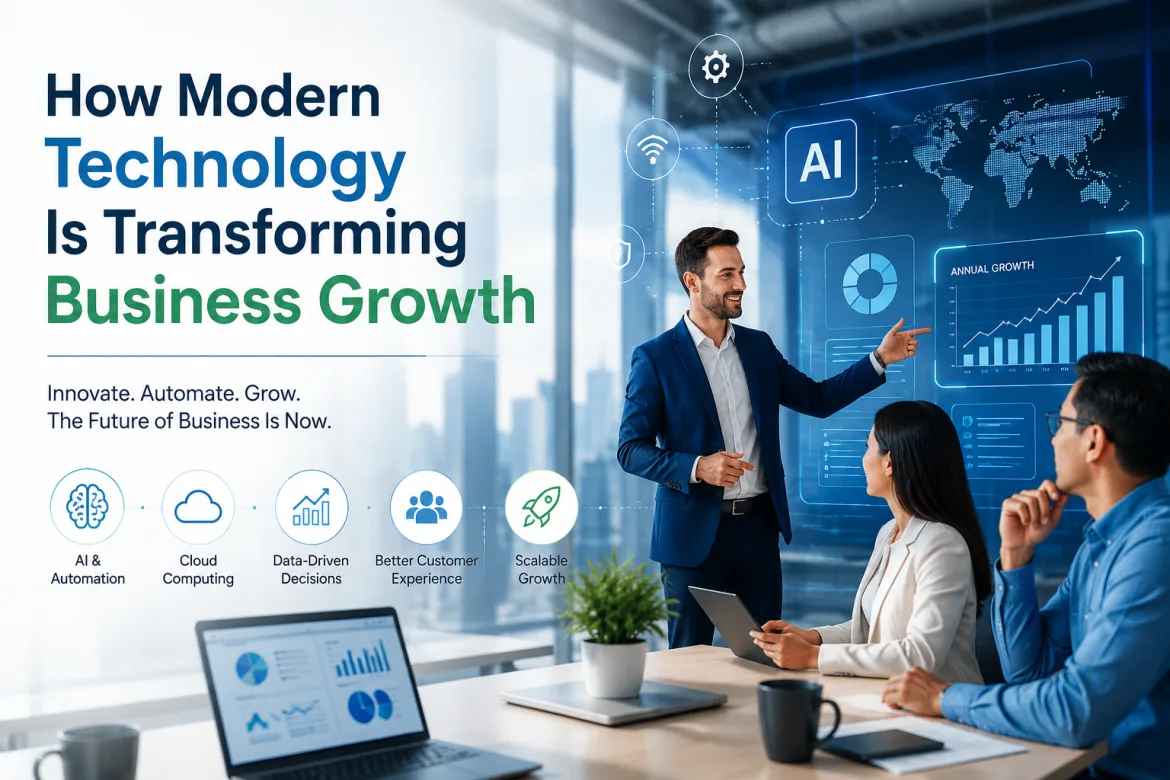
Traditional methods of corporate growth are no longer sufficient for modern enterprises. In today’s fast-paced digital economy, technology is the primary driver of corporate growth, efficiency, and innovation. From startups to multinational corporations, organizations rely on modern tools and digital platforms not only to support operations, but also to actively create growth goals.
What distinguishes this transition is how thoroughly technology is now integrated into decision-making, customer experience, and operational procedures. AI, cloud computing, automation, and data analytics are no longer optional tools; they are critical growth enablers.
In 2026, this transition will be even more obvious. Businesses that use modern technology may scale faster, improve efficiency, and provide highly tailored services, but others struggle to stay competitive.
The New Era of Digital-Driven Business Growth
Today, business success is about more than just expanding reach and income. It is about developing intelligent, scalable systems that can rapidly adapt to changing market conditions. Technology plays an important part in making this happen.
One of the most visible developments is the transition from manual to automated and data-driven operations. Intelligent algorithms now handle tasks that previously required significant human effort, allowing firms to focus on strategy and innovation.
At the same time, digital platforms have eliminated geographic constraints. Small businesses can now reach worldwide audiences via eCommerce, cloud infrastructure, and digital marketing ecosystems. This worldwide accessibility enables organizations to grow faster and compete more effectively in international marketplaces.
Key ways this transformation is happening include:
- Faster digital adoption across industries
- Increased reliance on cloud-based systems
- Expansion of global digital marketplaces
- Shift toward remote and hybrid work models
How Technology Is Driving Business Transformation
Artificial Intelligence and Smarter Decision-Making
Artificial intelligence has emerged as a key engine of modern company progress. It lets businesses to process large amounts of data and convert them into useful insights. This enables firms to spot patterns, trends, and opportunities that are difficult to detect manually. AI also shortens decision-making time by making real-time suggestions and predictions.
Businesses are now using AI to forecast customer behavior, optimize pricing tactics, and improve operational efficiency. AI-powered chatbots also offer fast customer help, enhancing the user experience while lowering strain. Businesses can explore artificial intelligence technologies to understand how AI is being applied across modern business operations.
Companies are now making decisions based on real-time data information, rather than assumptions. This enhances the accuracy of forecasting, planning, and strategy implementation. It also enables firms to quickly respond to changing market conditions and client behavior.
Cloud Computing and Business Scalability
Cloud computing has dramatically transformed the way organizations operate and scale. Instead of investing considerably in physical infrastructure, businesses can now get computing resources on-demand. This lowers upfront costs and increases operational flexibility. It also improves resource utilization during both peak and off-peak workloads.
This flexibility enables organizations to grow operations rapidly in response to demand. It also facilitates collaboration across worldwide teams, making remote work simple and efficient. Cloud systems also improve system stability by automating backups and providing disaster recovery alternatives. Additionally, organizations benefit from speedier deployment cycles and increased application performance. Businesses can explore cloud computing to understand how cloud infrastructure supports scalability and digital operations.
Some key advantages of cloud adoption include:
- Lower infrastructure and maintenance costs
- Flexible scalability based on business needs
- Improved data accessibility and collaboration
- Enhanced business continuity and disaster recovery
Data Analytics and Strategic Insights
Data has emerged as one of the most significant assets for modern organizations. However, its ultimate worth stems on how well it is examined and implemented. Proper data governance and real-time processing are now required for continued competitiveness. Businesses that properly use data can respond swiftly to market shifts and client demands.
Businesses use advanced analytics tools to better understand client preferences, track performance, and uncover new opportunities. For example, eCommerce platforms use data to propose things, but banking institutions use it to detect fraud patterns. These tools can also assist firms forecast trends and optimize operational strategy. Predictive analytics helps organizations decrease risks and increase planning accuracy.
Better insights enable firms to make smarter, faster, and more accurate decisions. Data-driven decision-making increases departmental efficiency and decreases guessing in strategic planning. It also improves client happiness by providing more personalized experiences. Finally, effective data usage promotes long-term business growth and innovation.
Automation and Operational Efficiency
Automation is changing the way firms manage repetitive jobs. It saves manual burden and increases overall departmental efficiency. This enables teams to focus on strategic and creative work rather than regular procedures. It also reduces human error, yielding more accurate and consistent results.
Invoicing, email marketing, reporting, and customer onboarding may now be automated with minimal human participation. This enables teams to focus on higher-value tasks.
Automation benefits include:
- Reduced operational costs
- Improved productivity and accuracy
- Faster task completion cycles
- Better resource utilization
Digital Customer Experience and Personalization
Customer expectations have shifted substantially. People today want fast, smooth, and personalized experiences across all digital touchpoints. Businesses must constantly adapt to changing user behavior in order to remain relevant and competitive.
Modern technology allows businesses to provide personalized experiences based on user behavior and preferences. Everything today relies on data, from individualized product suggestions to focused marketing strategies. AI and analytics tools make it easier to understand client intent and anticipate future requirements.
This not only enhances consumer pleasure, but it also boosts engagement and loyalty over time. Strong customisation tactics can also help firms improve conversion rates and establish better client relationships over time.
Cybersecurity and Building Digital Trust
As businesses become more digital, cybersecurity has become an essential component of growth. Customers require assurance that their data is safe and secure. Strong security policies can help firms comply with worldwide data protection standards. Establishing digital trust is critical for long-term consumer connections and business reputation.
To protect sensitive information, modern cybersecurity systems include enhanced encryption, AI-based threat detection, and multi-layer authentication. These technologies enable real-time detection and prevention of threats before they do damage. Continuous monitoring and regular security audits help to increase system resilience. As cyber threats advance, firms must develop proactive and adaptive security policies.
Strong security practices help businesses:
- Protect customer data and business assets
- Build trust and brand credibility
- Ensure compliance with regulations
- Reduce risk of cyberattacks
Industry-Wide Impact of Modern Technology
Modern technology is affecting almost every industry in unique ways. AI-powered diagnostics and digital health records improve patient outcomes while also making healthcare more accessible. Remote consultation tools have increased access to medical care.
Businesses in retail and eCommerce use tailored recommendations, automated logistics, and digital payment systems to improve the consumer experience and streamline operations.
In finance, digital banking platforms, fraud detection technologies, and mobile apps are changing how people manage their money. These advances increase transaction speed, security, and overall client convenience.
To reduce downtime and increase productivity, manufacturers are implementing smart sensors and predictive maintenance systems. Real-time tracking and route optimization technology are used by logistics organizations to optimize supply chains.
Education has also progressed tremendously, with online learning platforms and AI-powered learning systems making it more flexible and accessible globally.
Challenges in Technology Adoption
- High Initial Investment Costs
Modern technologies may necessitate considerable upfront expenditures on tools, equipment, and deployment.
- Integration with Existing Systems
Legacy systems and old software may make it difficult to integrate new solutions.
This can cause delays, compatibility concerns, and increased development complexity.
- Lack of Skilled Professionals
Many firms struggle to locate professionals capable of managing sophisticated technologies successfully.
Even strong systems may fail to produce the intended outcomes if they are not used properly.
- Data Privacy and Compliance Issues
Businesses must adhere to stringent restrictions when dealing with sensitive customer data.
Noncompliance might result in legal sanctions and a loss of customer trust.
- Long-Term Benefits vs Short-Term Difficulties
Initial obstacles can impede digital transformation projects.
However, the long-term efficiency, scalability, and growth advantages are far greater.
Future Outlook: The Next Phase of Business Technology
The future of corporate growth will be even more closely tied to developing technologies. Artificial intelligence will continue to evolve into more autonomous decision-making systems that require less human intervention.
Edge computing and 5G will enhance real-time data processing, allowing for speedier and more responsive commercial processes. At the same time, immersive technologies such as augmented and virtual reality will transform customer interaction and training.
Future businesses will rely heavily on:
- Intelligent automation systems
- Predictive and prescriptive analytics
- Fully integrated digital ecosystems
- Real-time global collaboration tools
Companies that implement these ideas early will have a significant competitive edge in the market.
Conclusion
Modern technology has drastically changed the way organizations grow and compete in today’s digital economy. From artificial intelligence and cloud computing to automation and data analytics, digital innovation is transforming many aspects of company operations.
While issues such as cost, integration, and talent deficiencies persist, the long-term benefits of technology adoption are obvious. Businesses that embrace digital transformation improve their efficiency, scalability, and customer focus.
As we approach 2026 and beyond, technology will continue to play an increasingly important role in influencing company success. Organizations that invest in contemporary systems now do more than just improve present performance; they are laying the groundwork for long-term, sustainable success in an increasingly digital world.