

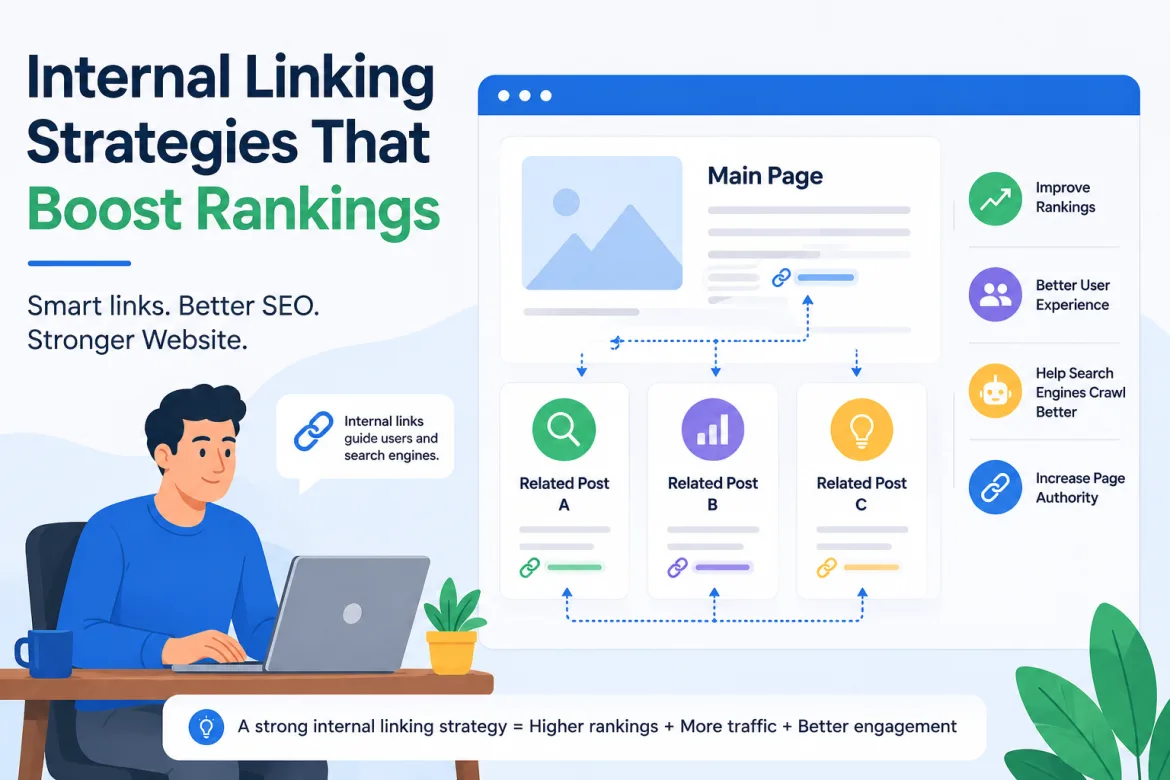
When organizations think about SEO, they frequently consider keywords, backlinks, content production, and technical optimization. While all of these characteristics are crucial, one particularly powerful method is sometimes overlooked: internal connection. A well-planned internal linking structure helps search engines understand your website while also making it easier for people to traverse its content. It is one of the few SEO methods that you have complete control over and may offer long-term results without the need for external resources.
Internal links connect pages on the same website, establishing relationships between content pieces and directing visitors to pertinent information. Search engines use these links to find pages, analyze content structure, and decide which pages are most significant. When used strategically, internal linking can help to improve rankings, raise page authority, promote engagement, and support overall SEO growth.
What Is Internal Linking?
Internal linking is the technique of using hyperlinks to connect one page of your website to another within the same domain. These links may appear in blog posts, service sites, product descriptions, navigation menus, or resource sections.
For example, if you write a blog on keyword research and include a link to another article about SEO content writing, the link is regarded an internal one. These links provide paths that help visitors and search engine crawlers to navigate your page more effectively.
Internal links, as opposed to external backlinks, are completely under your control. This makes them one of the most simple and effective strategies to boost SEO performance.
Why Internal Linking Is Important for SEO
Search engines use links to find and analyze online pages. Internal links provide crucial signals to search engines, allowing them to determine which pages are related and which information should be prioritized.
A robust internal linking strategy provides various SEO benefits:
- Improves search engine crawling and indexing speed.
- Promotes authority throughout your website.
- Enhances keyword relevancy and topic understanding.
- Improves user experience and navigation.
- Improves webpage engagement.
- Helps improve rankings for key pages.
When numerous pages link to the same piece of content, search engines frequently regard that page as more valuable within the website structure. This can improve its potential to rank for relevant search searches.
For additional guidance, see internal linking best practices.
Build a Logical Website Structure
Before developing internal links, it is critical to have a clear website architecture. Consider your website to be a road map, with each page connecting logically to other important pages.
A well-organized structure often begins with the homepage, followed by category pages, service pages, and supporting information. This hierarchy assists search engines in understanding how material is organized and which pages play a critical function on the website.
A digital marketing company, for example, may have a main SEO Services page that is accompanied with articles on keyword research, technical SEO, link building, local SEO, and content optimization. Linking these similar pages together strengthens the subject relationship and boosts overall SEO effectiveness.
When your website structure is obvious, search engines can crawl the content more efficiently, and people can readily access the information they require.
Use Contextual Internal Links Naturally
Contextual links are links that appear within the main content of a page. These are widely regarded as the most beneficial sort of internal connections because they provide both relevancy and context. They assist readers in finding relevant content when they need it, thereby enhancing both SEO and user experience.
Instead of adding links at random, place them where they will actually assist readers learn more about a topic. For example, a post about content marketing may organically link to resources on blogging tactics, keyword research, or content clusters.
Effective contextual connections should:
- Compatible with existing material.
- Direct visitors to relevant and valuable pages.
- Enhance the reader’s experience.
- Assist with overall content journey.
Search engines use the material around a link to better comprehend the destination page. This makes contextual linking a critical SEO tactic that improves both rankings and user engagement.
Optimize Anchor Text Carefully
When a user clicks a link, they see anchor text, which is clickable. It adds context to the destination page and helps search engines comprehend what the linked material is about. Using concise and relevant anchor text boosts both ranking potential and user understanding.
Many websites make the mistake of use generic terms like “click here” or “learn more.” These phrases are useful for usability, but they add minimal SEO value. Instead, use detailed anchor text that indicates exactly what users can expect after clicking. For example, “technical SEO checklist” is significantly more instructive than a generic link term.
Some anchor text best practices include:
- Use descriptive and relevant words.
- Keep anchor text natural within sentences.
- Avoid excessive keyword cramming.
- Use different anchors rather than repeating the same ones.
A balanced strategy improves relevancy while still providing a natural reading experience.
For more information about optimizing links and on-page SEO, explore on-page SEO best practices.
Create Topic Clusters Around Pillar Pages
One of the most effective internal connecting tactics is to create topic clusters. This strategy promotes topical authority and boosts your website’s potential to rank for broader keyword categories.
A topic cluster consists of a comprehensive pillar page and several associated articles. Each supporting article links to the pillar page, which links to all supporting resources.
For example, a pillar page on SEO could link to pages covering:
- Conduct keyword research.
- On-page SEO.
- Technical SEO
- Link building
- Local SEO
- Optimize content.
This integrated structure communicates expertise to search engines, resulting in a better content ecosystem. As a result, both the pillar page and supporting content frequently see ranking boosts.
Prioritize Links to High-Value Pages
Not all pages contribute equally to corporate objectives. Some pages result in leads, sales, inquiries, or other significant conversions. These pages should be given additional support through strategic internal linking.
Identify the pages with the greatest business impact and make sure they get links from relevant content throughout the website. Blog postings, manuals, case studies, and resource pages can all be effective sources of internal authority.
For example, if your SEO consultancy page delivers quality leads, connecting to it from SEO-related blog posts might boost visibility and conversions. This technique directs users to pages that contribute directly to business success.
Link New Content to Existing Pages
Publishing new information is just the first step. To increase visibility, integrate new pages into your existing website structure using internal connections. Many websites produce wonderful information but forget to link to earlier pages. As a result, new content has lower visibility and takes longer to establish momentum in search results.
When you publish a new article:
- Include links to similar existing content.
- Connect with related category pages.
- Use links from pillar material as applicable.
- Reference the new page in previous articles.
This approach helps search engines locate material more quickly while also strengthening the entire content network.
Avoid Orphan Pages
Orphan pages are those that do not have any internal links going to them. Because they are isolated from the rest of the website, search engines may struggle to locate and prioritize them.
Many websites unintentionally create orphan pages as their content libraries develop. These pages frequently contain useful information but receive little attention since they are not well-integrated into the site’s structure.
To avoid orphaned pages:
- Perform regular content audits.
- Review web crawl reports.
- Include links from similar content.
- Link pages using category structures.
Every essential page should have relevant internal links pointing people and search engines to it.
Improve User Experience Through Internal Linking
The most effective internal linking techniques emphasize humans first and search engines second. When connections help visitors access relevant content, engagement automatically increases. This also encourages users to stay on the site for longer periods of time and browse more pages.
Consider a visitor reading a beginner’s guide on SEO. They may want more information on keyword research, content optimization, or technical SEO. Internal links allow you to continue exploring similar topics without returning to the search results.
This produces various benefits:
- Increased page views per session.
- Increased time spent on the webpage.
- Improved content discovery.
- Increased user satisfaction.
- Increased conversion opportunities.
A great user experience frequently coincides with SEO objectives, making internal linking beneficial from both viewpoints.
Regularly Audit Your Internal Linking Structure
Internal linkage is an ongoing process. As new information is published and current pages grow, you should assess your linking strategy on a frequent basis. This guarantees that all links remain relevant, functioning, and in line with your overall SEO objectives.
An internal link audit identifies broken links, orphan pages, weak content connections, and chances to improve key pages. Regular assessments ensure that your website continues to serve both visitors and search engines successfully.
During an audit, consider:
- Broken internal linkages.
- Orphan pages.
- High-value information is underlinked.
- Outdated anchor text.
- Missing linkages between similar topics.
Consistent maintenance helps to maintain the effectiveness of your SEO strategy over time.
You can also review internal links and SEO strategies for additional guidance on auditing and improving internal linking structures.
Common Internal Linking Mistakes to Avoid
While internal linking can be incredibly advantageous, certain errors can undermine its efficiency. Understanding these challenges might help you create a better organized and planned website structure. Avoiding these issues promotes better navigation, stronger SEO signals, and a better user experience throughout your website.
Common mistakes include:
- Using too many links on a single page.
- Use unrelated anchor text
- Linking to unrelated stuff.
- Ignoring outdated content assets.
- Creating orphaned pages.
- Overuse of exact-match keywords.
The goal should always be to build links that are intuitive for people while also naturally supporting SEO objectives.
Measuring the Success of Your Internal Linking Strategy
To determine whether your internal connecting initiatives are effective, track performance over time. SEO improvements are sometimes gradual, making regular measurement critical.
Key metrics to track are:
- Growth in organic traffic.
- Improved keyword rankings.
- Page indexing rates
- Average session duration.
- Pages visited per session.
- Effective conversion performance.
By examining these measurements, firms may determine which linking tactics offer the best outcomes and adjust their strategy accordingly.
Conclusion
Internal linking is one of the most effective but neglected SEO tactics accessible today. Unlike many ranking variables that require external assistance, internal connections are entirely within your control. When used strategically, they assist search engines comprehend your website, distribute authority across pages, and facilitate user navigation.
Businesses can get significant SEO benefits by designing a logical site layout, topic clusters, improving anchor text, supporting vital pages, and conducting regular audits. Over time, a strong internal linking strategy not only improves rankings but also enhances the visitor experience, resulting in increased engagement, higher conversions, and long-term organic development.