

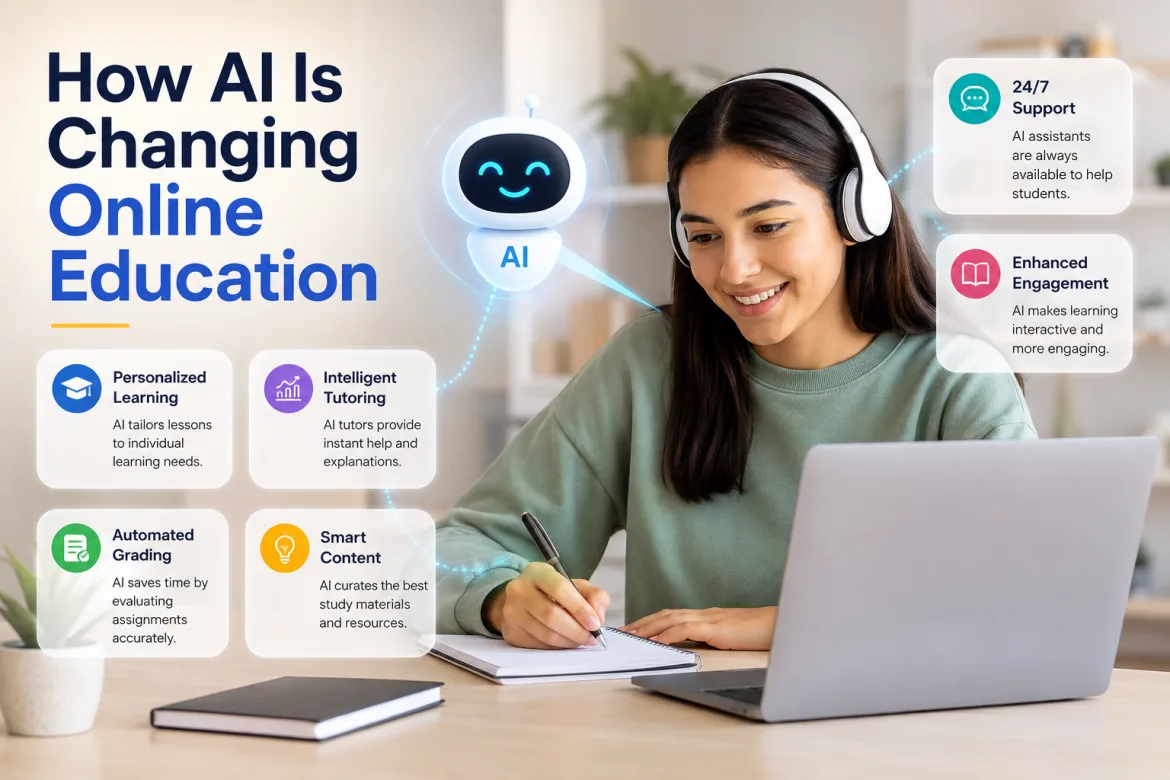
In 2026, online education will undergo a significant transition, fueled by artificial intelligence. AI has formed the foundation of modern learning platforms, allowing for individualized learning, AI tutors, automated assessments, and predictive analytics. It is changing how students learn, teachers educate, and institutions provide education.
Traditional online learning models couldn’t keep up with increased demands for interactive, adaptable, and personalized experiences, so the shift accelerated. Organizations increasingly require scalable solutions that can handle millions of learners worldwide. AI, cloud computing, automation, and cybersecurity are all contributing to the creation of smarter, more adaptive educational ecosystems.
Understanding this change is critical for startups, SMEs, and education-related organizations. AI-powered education is no longer a choice; it is a critical driver of innovation, growth, and long-term competitiveness in the global EdTech industry.
The Rise of AI in Online Education
Artificial intelligence has revolutionized online education from static video-based instruction to dynamic and adaptable digital ecosystems. Traditional e-learning platforms frequently presented the same content to all students, regardless of skill level, learning speed, or interests. AI has totally transformed that model.
Today’s AI-powered learning platforms can assess user behavior, learning patterns, strengths, and weaknesses in real time. Based on this data, the system can offer individualized content, quizzes, assignments, and learning routes for each learner.
This move is improving education’s engagement, efficiency, and accessibility across industries.
Why AI Adoption in Education Is Growing Rapidly
Several factors are driving the adoption of AI in online education:
- Increasing demand for personalized learning experiences
- Growth of remote work and remote education
- Rising need for scalable learning platforms
- Advancements in cloud computing and big data
- Demand for cost-effective training solutions
Educational institutions and EdTech businesses are making significant investments in AI because it has the potential to increase learner outcomes while lowering operational inefficiencies.
For organizations developing AI-powered learning systems, UNESCO’s guidance on generative AI in education and research provides useful considerations around human-centered, ethical, safe, and meaningful use of AI.
Personalized Learning Is Becoming the New Standard
One of the most significant ways AI is transforming online education is through personalization. Every student learns differently, and AI systems can now adjust information dynamically based on individual performance and engagement.
How AI Personalization Works
AI algorithms examine a variety of student behaviors, including quiz performance, learning speed, time spent on lessons, regions of difficulty, preferred learning formats, and interaction styles. Platforms can use this data to offer personalized lessons, extra resources, or alternative explanations to help students understand.
For example, if a learner struggles with mathematical topics, the system may suggest simpler examples, video lessons, or extra practice activities before going on. This results in a more effective learning environment than one-size-fits-all teaching strategies.
Real-World Example
Many worldwide learning platforms now use AI-powered recommendation engines comparable to streaming services. Just as entertainment platforms promote movies based on viewer preferences, AI education systems recommend courses and learning materials depending on student achievement and interests. This strategy can help students engage more and complete their courses.
AI-Powered Virtual Tutors and Chatbots
Virtual AI instructors are becoming one of the most important advancements in digital education. In 2026, AI-powered assistants will be available around the clock to provide students with quick answers, explanations, and guidance.
Benefits of AI Tutors
AI tutors allow educational platforms to deliver scalable support without significantly increasing operational costs. They can respond to frequent academic concerns, explain topics, suggest study schedules, and help with language development.
AI Chatbots in Student Support
AI chatbots are also being used by educational institutions to speed up administrative operations like student onboarding, course enrollment, fee queries, technical help, assignment reminders, and attendance tracking. This automation decreases the effort of support teams while increasing the student experience.
Automation Is Improving Efficiency Across Education Platforms
Automation is another significant reason AI is transforming online learning. AI-driven automation is being used by educational organizations to streamline tedious operations and increase efficiency.
Areas Where Automation Is Making an Impact
Automated Assessments
AI can analyze exams, assignments, and some written responses, saving educators time and allowing students to receive feedback more quickly.
Smart Content Creation
AI tools can create summaries, practice questions, learning modules, and interactive activities. This enables educators to develop information more efficiently.
Attendance and Monitoring
AI systems can automatically track learner participation, engagement, and completion rates, allowing institutions to identify students who may want further assistance.
Workflow Optimization
Administrative tasks like scheduling, notifications, reporting, and student management are increasingly being automated by AI-powered systems. Automation can help organizations that provide online training programs cut operational expenses while increasing scalability.
Cloud Technology Is Enabling Scalable Online Learning
AI-powered schooling is not possible without cloud infrastructure. Cloud services have formed the foundation of current online education systems due to their scalability, flexibility, and dependability.
Why Cloud Services Matter in Education
Cloud computing enables educational systems to serve huge numbers of users, securely store learning datasets, offer material globally, support remote learning settings, incorporate AI technologies, and save infrastructure costs. This is especially critical for startups and expanding EdTech enterprises that require scalable technology without making significant upfront costs.
Businesses evaluating cloud infrastructure for education can also review AWS education cloud solutions, which cover areas such as personalized learning, data, AI/ML capabilities, security, and scalable infrastructure.
Real-World Business Use Case
A developing online learning firm may start with a few hundred users, but rapid acceptance might quickly push demand to tens of thousands of students. The platform’s cloud-based infrastructure enables it to scale automatically without affecting performance or downtime. This adaptability is crucial in the rapidly evolving digital education business.
Cybersecurity Is Becoming a Top Priority in Online Education
As online education platforms collect more student data, cybersecurity has become a top priority for educational institutions and corporations. AI-powered platforms may handle sensitive data such student identities, payment information, academic records, learning analytics, and personal correspondence.
Without robust cybersecurity systems, these platforms are exposed to data leaks and assaults.
How AI Improves Cybersecurity
AI is also helping to improve cybersecurity in education by detecting suspicious activity in real time, limiting illegal access, identifying fraud patterns, monitoring network vulnerabilities, and automating threat detection. Advanced AI security systems can detect strange behavior patterns more quickly than traditional manual monitoring.
Why Businesses Must Prioritize Security
For firms that provide online learning platforms, cybersecurity is inextricably linked to trust and reputation. A single data breach can harm brand credibility and lead to legal issues. That is why modern educational institutions invest in secure cloud infrastructure, encrypted systems, and AI-powered cybersecurity solutions.
AI Is Supporting Better Learning Analytics
Data-driven decision-making is becoming increasingly valuable in online education. AI-powered analytics technologies give institutions a better understanding of student behavior and performance.
What Learning Analytics Can Measure
Modern platforms can monitor student engagement, course completion rates, learning progress, dropout risk, assessment performance, and content efficacy. These insights enable instructors to optimize course design and increase learning outcomes.
Predictive Analytics in Education
Predictive analytics is one of the most prominent trends for 2026. AI systems can detect learners who may struggle or disengage before the problem worsens. This enables universities to act early and provide additional assistance, mentorship, or individualized learning programs.
The Role of AI in Corporate Training and Workforce Development
AI is revolutionizing not only academic education, but also business learning and workforce development. Companies are increasingly investing in AI-powered learning tools to teach their personnel more efficiently.
Benefits for Businesses
- Deliver personalized employee training
- Track workforce skill development
- Automate onboarding processes
- Improve remote learning experiences
- Scale learning programs globally
As sectors change swiftly, constant learning has become critical to workforce competitiveness.
Example of AI in Enterprise Learning
Large businesses now use AI systems to offer training modules based on employee roles, performance data, and career objectives. This leads to more relevant and effective learning experiences.
Digital Transformation Is Reshaping the Education Industry
AI is part of a much bigger digital shift occurring in education. Educational institutions are no longer only providing online courses; they are creating entire digital ecosystems powered by AI, cloud computing, big data, automation, cybersecurity, mobile technologies, and interactive collaboration tools.
This shift affects how educational services are delivered, administered, and commercialized.
Key 2026 Industry Trends
Hybrid Learning Models
Blended learning, which combines both physical and digital education, is becoming increasingly popular.
AI-Generated Learning Content
AI-assisted content generation is lowering production costs and speeding up course creation.
Immersive Learning Experiences
Virtual and augmented reality are becoming increasingly popular in technical and professional education.
Voice and Multilingual Learning
AI-powered voice assistants and real-time translation tools are making education more accessible throughout the globe.
Microlearning Platforms
Short-form learning experiences designed for mobile users are becoming increasingly popular among professionals and businesses.
Challenges Businesses Must Consider
Although AI has significant benefits, adopting AI-powered education systems presents problems.
Common Challenges
High Initial Investment
Advanced AI systems and cloud infrastructure may necessitate large investment in the early phases.
Data Privacy Concerns
Organizations must follow data protection requirements and maintain high cybersecurity standards.
Integration Complexity
Integrating AI technologies into current systems might be technically difficult without the correct technological partner.
Overdependence on Automation
Too much automation without human control can erode the personal connection between educators and students.
Ethical AI Concerns
Bias in AI algorithms and a lack of transparency can lead to educational fairness difficulties if not addressed effectively.
Businesses must approach AI adoption strategically rather than merely installing technology to meet a trend.
How to Choose the Right Technology Partner for AI Education Solutions
Choosing the correct technology partner is a critical decision for firms developing AI-powered education platforms. A reliable technology partner may assist firms in scaling faster, improving security, and mitigating long-term development risks.
Key Factors to Consider
Industry Experience
Choose a company that has demonstrated competence in AI, cloud services, EdTech platforms, and digital transformation.
Scalability
Ensure that the technological architecture can accommodate future growth and worldwide expansion.
Cybersecurity Expertise
Security should never be an afterthought. Your technology partner needs to prioritize secure development processes.
AI and Automation Capabilities
Look for providers with expertise in machine learning, predictive analytics, automated workflows, and AI integration.
Cloud Infrastructure Knowledge
A robust cloud infrastructure is required for dependable and scalable online learning systems.
Ongoing Support and Maintenance
Long-term technical support is required for optimal platform performance, security updates, and future feature enhancements.
Common Mistakes Businesses Should Avoid
Many firms launch digital transformation projects without appropriate planning. This frequently leads to pricey blunders.
Common mistakes include selecting technology solely for cost, ignoring cybersecurity requirements, implementing AI without clear business goals, overcomplicating the user experience, failing to optimize for mobile learning, ignoring scalability requirements, disregarding data privacy compliance, and underestimating long-term maintenance costs.
Successful AI implementation necessitates strategic planning, technological knowledge, and a thorough understanding of learner requirements.
The Future of AI in Online Education
The future of online education will become even more intelligent, adaptive, and immersive over the next few years.
- Hyper-personalized learning experiences
- Real-time adaptive education
- Advanced virtual instructors
- Smarter predictive analytics
- Fully automated administrative operations
As artificial intelligence advances, online education systems will become more accessible, efficient, and scalable than ever before.
The next phase of online education will be determined by how well firms integrate AI innovation and human-centered teaching. Successful systems will need to strike a mix between automation and educator interaction, customization and privacy, and quick experimentation with dependable infrastructure. Education organizations may create resilient digital experiences that remain relevant as student expectations change by linking technology investments with measurable learning and business objectives.
Organizations developing AI-focused education programs can also refer to UNESCO’s AI competency framework for students for guidance on AI-related competencies, responsible use, and curriculum integration.
Conclusion
In 2026, artificial intelligence will alter online education through personalized learning, AI tutors, automation, cloud scalability, cybersecurity, and predictive analytics. The education business is transforming into a more adaptable and data-driven ecosystem that improves both teaching and learning outcomes. Startups, SMEs, and corporations are leveraging AI to boost engagement, optimize operations, and create scalable EdTech platforms that suit modern demands.
However, successful digital transformation entails more than simply implementing new tools. Businesses must prioritize the correct strategy, robust cybersecurity, and scalable cloud infrastructure while collaborating with competent technology partners. Organizations that deploy AI successfully and early can improve learning outcomes while also strengthening their position in the global online education market.