

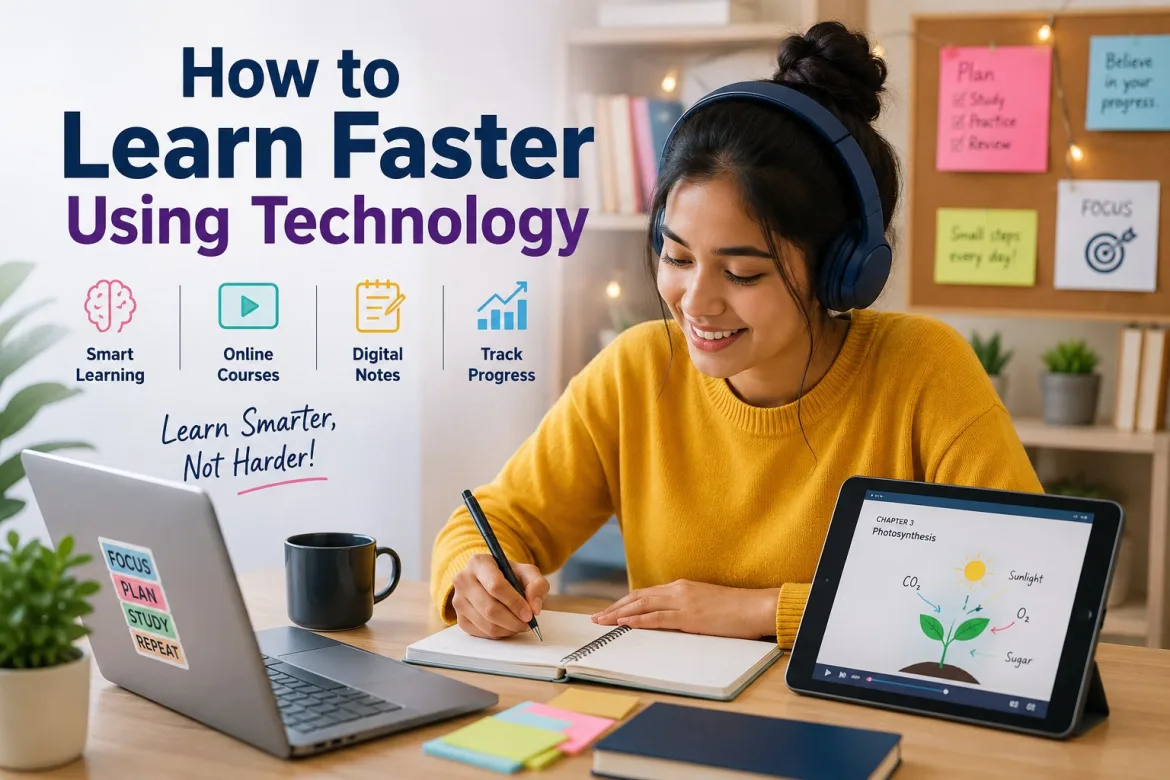
People’s learning styles have changed dramatically in recent years. In 2026, technology is no longer only a supplement to school; it has become the core of modern learning. AI-powered tools, cloud platforms, and digital ecosystems now enable learners to access material faster and learn more effectively. Personalized and on-demand learning experiences help students, professionals, and business executives alike. This transformation has made education more adaptable, scaleable, and accessible than ever before.
Traditional learning methods were primarily reliant on memorization, repetition, and unchanging classroom structures. Today, smart learning platforms automate tasks, personalize information, and offer real-time access to global knowledge resources. Whether learning coding, cybersecurity, marketing, or business strategy, technology allows for faster skill development and improved retention. It also helps students to practice and apply their knowledge in real-world circumstances. This makes learning more practical and results-oriented.
Faster learning benefits startups and enterprises directly by increasing creativity, productivity, and competitiveness. Companies that invest in modern learning technologies can quickly upskill their personnel and better respond to the digital transition. This is especially relevant in AI, automation, cloud computing, and data-driven enterprises. In this post, we’ll look at how technology can help you learn faster and create smarter learning systems for long-term success.
Why Technology Is Changing the Way We Learn
Technology has transformed how information is provided, consumed, and stored. Instead of using one-size-fits-all education methods, new platforms employ clever algorithms and adaptive systems to tailor learning experiences to user behavior, skill level, and progress.
One of the most significant benefits of technology-driven learning is accessibility. Students can access courses, tutorials, simulations, and live sessions from almost any device. Cloud services enable teams from various countries to collaborate and train in real time, making global learning more efficient and scalable.
Another significant advancement is the incorporation of artificial intelligence into educational platforms. AI systems may now evaluate learning habits, detect weak areas, offer personalized information, and automate repetitive chores such as note taking and quiz generation. This saves time and increases retention. Tools such as Khan Academy’s Khanmigo demonstrate how AI can support interactive learning and personalized guidance.
Technology also accommodates many learning styles with interactive films, gamification, augmented reality, podcasts, and real-time collaboration tools. As a result, learners are more engaged and motivated than in traditional techniques.
The Science Behind Faster Learning
Before we can grasp the tools, we must first understand why some learning approaches are more effective than others. Active involvement, repetition, visualization, and practical application have all been shown in studies to greatly boost memory recall.
Technology enhances these principles in several ways:
- AI technologies improve memory recall through personalized repeat intervals.
- Interactive platforms boost engagement and attention span.
- Automation eliminates manual tasks and distractions.
- Cloud platforms provide constant access to resources.
- Gamified systems provide motivation and consistency.
Modern students no longer have to spend hours searching for information manually. Smart solutions simplify the process, allowing users to concentrate on comprehending and implementing concepts rather than managing data.
AI-Powered Learning Tools in 2026
Personalized AI Tutors
Artificial intelligence has emerged as one of the most potent techniques for accelerating learning. AI tutors now serve virtually as personal mentors. They respond to inquiries promptly, generate explanations in plain language, construct study schedules, and adapt teaching methods based on learning speed.
Students studying programming, for example, can utilize AI coding assistants to discover errors in real time and teach better ways. Professionals learning cybersecurity can mimic attack scenarios and receive automated feedback right away.
Businesses are increasingly incorporating AI-powered learning systems into staff training programs. These systems monitor performance and recommend specific learning modules to help improve skills.
Smart Note-Taking and Summarization
Modern artificial intelligence systems automatically summarize lengthy documents, discussions, and research materials into brief notes. This significantly reduces the time required to process information.
Instead than spending hours reading lengthy papers or watching training films, students can quickly extract crucial insights and focus on practical application. This is especially important for startup founders, CTOs, and CEOs who require quick decision-making skills.
AI-Powered Language Learning
Language learning platforms in 2026 will combine speech recognition, natural language processing, and behavioral analysis to improve pronunciation, grammar, and communication abilities. These platforms create individualized lessons that evolve as users progress.
The end result is a more natural and efficient learning experience than traditional textbook-based methods.
Cloud-Based Learning Platforms and Scalability
Cloud technology has made learning more scalable and collaborative. Organizations no longer require costly physical infrastructure to teach employees or maintain educational materials. Teams can access learning materials at any time and from any location, which increases flexibility and accessibility. It also allows for real-time collaboration among worldwide teams with no geographical boundaries.
Benefits of Cloud Learning Platforms
Cloud-based systems offer several advantages:
- Access learning resources from anywhere.
- Facilitate real-time cooperation.
- Securely store data.
- Expand training programs globally.
- Lower operating costs.
- Enhance remote workforce education.
Cloud learning solutions make it easier for businesses to onboard and educate distant teams. Employees may immediately access updated information, guaranteeing continuous knowledge sharing across departments.
Real-World Business Use Case
A quickly expanding SaaS company may need to teach hundreds of staff in cybersecurity processes, compliance standards, and software design. Instead of holding multiple physical seminars, the organization can employ a cloud-based learning management system that includes AI-powered assessments and automatic reporting.
This not only saves time and money, but also provides scalable learning as the organization grows rapidly.
How Automation Helps People Learn Faster
Automation is becoming an essential component of modern education and business training. By automating repetitious processes, learners may concentrate on deep comprehension and practical skill development.
Examples of Learning Automation
- Automatically generate flashcards.
- Provide smart revision reminder.
- AI-powered quizzes and assessments.
- Features include automated project feedback.
- Workflow connection with productivity tools.
- Personalized learning schedules.
Automation also increases consistency. Many students struggle because they lack structure or miss review sessions. Automated systems solve these issues by using sophisticated learning procedures.
Automation helps firms simplify employee development initiatives. HR departments may eliminate the need for manual intervention in onboarding, compliance training, certifications, and performance tracking.
Cybersecurity Education Is Becoming Essential
As digital transformation accelerates, cybersecurity knowledge is becoming increasingly crucial in all industries. Businesses are now prioritizing cybersecurity awareness training for employees because cyber threats are evolving so quickly.
Technology-based cybersecurity learning platforms offer:
- Real-time threat simulations.
- Interactive ethical hacking labs.
- AI-powered risk analysis training.
- Phishing attack simulations.
- Cloud security certification programs.
By 2026, even non-technical professionals are expected to understand fundamental cybersecurity concepts. Companies that fail to adequately educate their staff frequently have data breaches caused by human mistake rather than technical flaws.
Fast, technology-driven learning enables firms to remain resilient in an increasingly digital world.
The Role of Digital Transformation in Modern Learning
Digital transformation encompasses more than just software development and IT infrastructure. It is also transforming education and professional growth. Organizations are progressively incorporating learning technologies into their regular operations. Training is no longer considered a separate activity; rather, it is integrated into the workflow.
Key Digital Transformation Trends in Learning
Microlearning
Microlearning presents information in concise, targeted courses that are simpler to digest and recall. Employees can complete training during brief breaks rather than attending lengthy seminars.
Virtual and Augmented Reality
VR and AR technologies enable immersive learning experiences. Medical students can perform procedures electronically, while manufacturing personnel can master machine operations in safe simulated conditions.
Data-Driven Learning Analytics
Modern platforms use learner behavior and performance data to improve instructional tactics. Businesses utilize analytics dashboards to track employee performance and detect skill gaps.
Mobile-First Learning
Most current learners prefer mobile-friendly educational platforms. Mobile learning enables professionals to continue their skill development when traveling or working remotely.
Best Strategies to Learn Faster Using Technology
Use Active Learning Techniques
Passive reading rarely works. Quizzes, conversations, projects, and simulations should be used instead to engage students in active learning.
Technology systems that foster interaction dramatically increase retention rates.
Combine AI With Human Mentorship
AI tools are great, but human guidance is still necessary. The best results are typically achieved by combining AI-generated insights with mentorship from experienced people.
Learn Through Real Projects
Practical application accelerates understanding. Coding platforms, online laboratories, and simulation tools enable learners to obtain practical experience rather than depending solely on theory.
Use Spaced Repetition Systems
Spaced repetition tools employ algorithms to maximize review scheduling for long-term memory retention. These solutions work especially well for language acquisition, technical certifications, and exam preparation. Tools such as Coursera can also help learners access structured courses and practice opportunities to reinforce their knowledge.
Minimize Digital Distractions
While technology facilitates learning, distractions remain a significant concern. Students should employ focus apps, notification blockers, and productivity tools to stay focused.
Common Mistakes People Make When Using Technology for Learning
Relying Too Much on AI
AI technologies are fantastic aids, but relying only on them can diminish critical thinking skills. Learners should continue to analyze concepts independently and practice problem solving.
Consuming Too Much Information
Many people mistake information absorption for true learning. Watching endless videos with no implementation frequently results in poor retention.
Ignoring Practical Skills
Theory alone is not sufficient. Businesses and employers are increasingly valuing practical experience, project execution, and adaptability.
Using Too Many Platforms
Switching between apps, courses, and tools causes cognitive overload. It is preferable to focus on a streamlined learning ecosystem.
Neglecting Cybersecurity Awareness
Using random tools without evaluating security measures can put personal or commercial data at danger. Businesses should ensure that learning platforms adhere to appropriate cybersecurity requirements.
Choosing the Right Technology Partner for Learning Solutions
For firms investing in learning technologies, finding the suitable IT or software development partner is important.
Important Factors to Consider
Scalability
The platform should be able to accommodate future expansion and increased user needs while being performant.
Security and Compliance
Cybersecurity safeguards, encryption, and regulatory compliance should be primary objectives.
AI Integration
Modern learning systems should have intelligent personalization, automation, and analytics capabilities.
User Experience
A difficult interface lowers engagement. Platforms should be simple and mobile-friendly.
Cloud Infrastructure
Cloud-native systems offer greater flexibility, uptime, and collaborative capabilities.
Customization
Every firm has unique workflows and training requirements. Custom solutions often outperform generic platforms.
How Startups and Enterprises Benefit From Faster Learning
Startups
Startups operate in highly competitive contexts where quick learning determines success or failure. Founders and teams must be continually adapting to new technology, industry trends, and customer expectations.
Technology-driven learning helps startups:
- Train employees faster.
- Reduce operational inefficiencies.
- Improve innovation speed.
- Scale knowledge sharing.
- Adapt quickly to digital transformation.
SMEs
Small and medium-sized enterprises benefit from cost-effective cloud-based training tools that boost labor productivity without requiring significant infrastructure investments.
Enterprises
Large companies leverage AI, automation, and analytics to create enterprise-wide learning ecosystems that promote continuous innovation and long-term scalability.
Future Trends in Learning Technology for 2026 and Beyond
The future of learning will be more intelligent, immersive, and individualized. Several trends are anticipated to dominate the future years:
- AI-powered tailored educational paths.
- Blockchain-based certification systems.
- Key features include.
- Real-time skill analytics.
- Advanced cybersecurity learning environments.
- Voice-based AI tutors.
- Immersive metaverse classrooms.
- Hyper-personalized workplace training solutions.
As digital transformation continues accelerating, businesses that prioritize continuous learning will remain more competitive and resilient.
Conclusion
Learning in 2026 is no longer about studying harder, but rather about learning smarter with technology. AI tools, cloud platforms, and automation technologies enable students, professionals, and organizations to learn knowledge more quickly and efficiently. These technologies enable to tailor learning experiences and increase retention.
Whether you are a student, startup entrepreneur, or business executive, the appropriate learning atmosphere can boost productivity and innovation. However, success is dependent on selecting the appropriate tools, developing strong learning habits, and implementing safe, scalable digital processes for long-term growth.
Organizations that invest in contemporary learning systems now will be much better prepared to face the challenges and opportunities of tomorrow’s digital economy.